
Upgrading RV Lighting: LED vs. Traditional Options
RV lighting affects far more than how your camper looks after sunset. It shapes the mood inside your living space, helps you cook safely, makes nighttime setup easier, and influences how long your battery power lasts when you are away from hookups. Many RV owners start thinking about lighting upgrades because a bulb burns out, a fixture feels outdated, or the interior seems dim, yet a thoughtful upgrade can improve comfort throughout the entire camper. When you understand the differences between LED and traditional RV lighting, it becomes much easier to choose the right option for the way you travel.
For many RV shoppers and owners, lighting is one of those features that seems small until they spend real time on the road. A bright fixture over the dinette can make family meals easier, while softer lighting near the sofa can help the camper feel less like a vehicle and more like a cozy retreat. Berryland Campers understands that RV comfort comes from dozens of details working together, and lighting is one of the simplest upgrades that can make an older camper feel cleaner, newer, and more practical. Whether you are updating a used RV, improving a current model, or comparing features before your next purchase, lighting deserves a closer look.
Why Does RV Lighting Matter So Much?
RV lighting has to work harder than household lighting because every fixture serves a space that is compact, mobile, and often powered by a limited electrical system. In a house, one dim corner may not seem like a major problem, but inside an RV, poor lighting can make the kitchen harder to use, the bathroom feel cramped, and the bedroom less comfortable. The right lighting helps each zone do its job without wasting energy, generating extra heat, or overwhelming the small interior with harsh brightness. That balance matters whether you spend weekends at nearby campgrounds or take long trips across several states.
Lighting also plays a practical role in safety, especially around steps, storage bays, awnings, and exterior entry points. A well-lit campsite makes it easier to avoid tripping hazards, connect utilities, find gear, and move around after dark without relying only on a flashlight. Inside the RV, proper lighting can help prevent eye strain, make controls easier to read, and improve visibility in areas where sharp tools, hot surfaces, or water are involved. Since RVs combine travel, cooking, sleeping, storage, and outdoor living in one compact setup, lighting becomes part of the overall experience rather than a decorative afterthought.
What Are Traditional RV Lighting Options?
Traditional RV lighting usually refers to incandescent, halogen, and fluorescent fixtures, all of which were common in campers for many years before LED technology became the preferred option. Incandescent bulbs are the older familiar style, creating light by heating a filament until it glows. Halogen bulbs work in a similar way, although they tend to burn brighter and hotter than standard incandescent bulbs. Fluorescent lighting, often found in older overhead fixtures, uses a tube and ballast system that can provide broad light but may flicker, hum, or feel less inviting over time.
These traditional options still appear in many used RVs, especially models built before LED lighting became widespread. Some owners keep them because the fixtures still work, replacement bulbs are familiar, or the lighting color feels warm and comfortable. In certain cases, traditional bulbs can also be simple to replace if the fixture uses a common size. However, their drawbacks become more noticeable when you compare them with modern LED systems, especially in areas like energy use, heat output, lifespan, and battery efficiency.
The Biggest Benefits of LED RV Lighting
LED lighting has become the standard choice for many modern RVs because it uses power efficiently while still producing strong, reliable light. Unlike incandescent and halogen bulbs, LEDs create light with much less wasted heat, which makes them especially helpful in a camper where air conditioning, ventilation, and battery management all matter. Since RVs often rely on 12-volt systems, every bit of saved energy can help extend comfort during dry camping, overnight stops, or campground stays where you want to reduce electrical demand. This efficiency is one of the biggest reasons many RV owners upgrade interior and exterior fixtures to LEDs.
Another major advantage is lifespan, because LED bulbs often last much longer than traditional bulbs under normal use. That means fewer replacements, fewer burned-out fixtures during trips, and less time spent searching for the right bulb size when you would rather be relaxing. LEDs also handle vibration well, which is useful in an RV that moves over highways, gravel roads, and uneven campground paths. Since traditional filaments can be more fragile, LED lighting often makes sense for a vehicle that is constantly being driven, parked, leveled, packed, and unpacked.
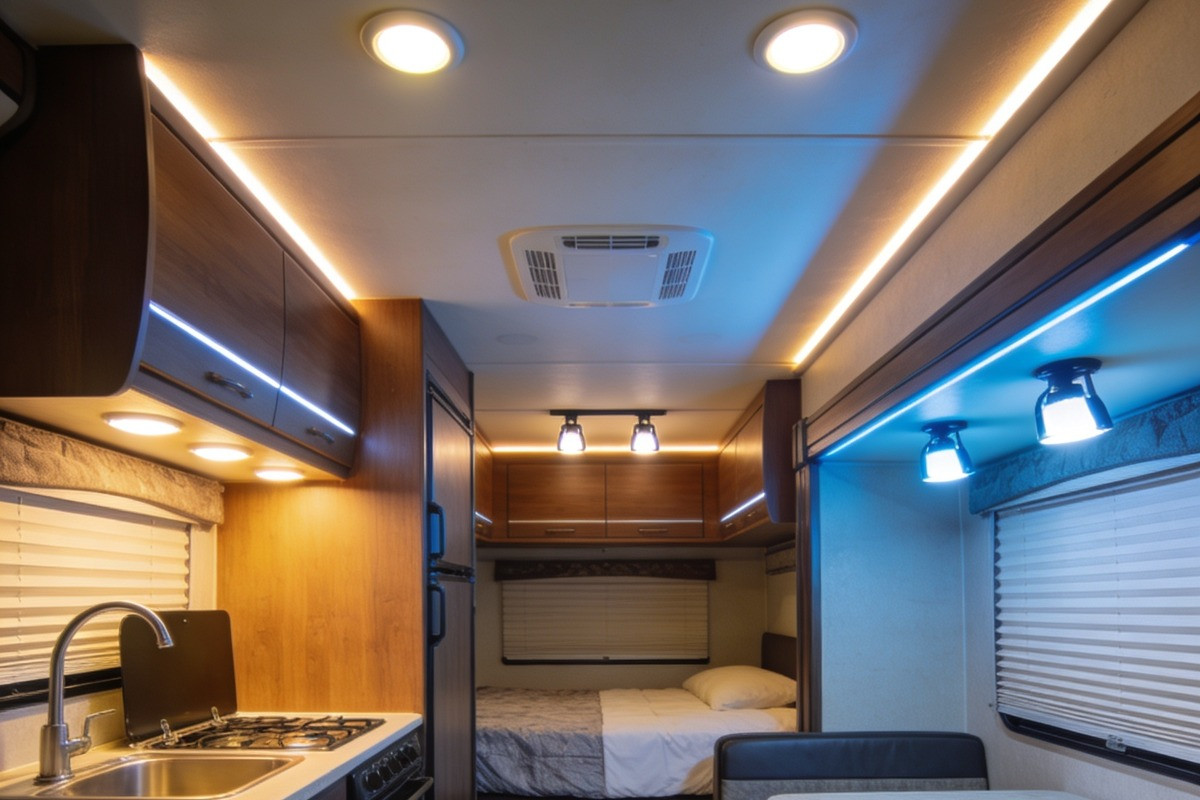
LEDs also give RV owners more control over the feel of the interior. You can find warm white lights that create a relaxed cabin feel, brighter neutral lights that help with cooking and cleaning, and cooler lights that work well in storage compartments or utility areas. Many LED fixtures are also available with dimming features, color temperature options, or modern styling that helps refresh the entire camper. Instead of thinking of lighting only as a replacement part, RV owners can use LEDs to shape the way each space looks and functions.
Where Traditional Lighting Still Makes Sense
Traditional lighting is not always useless, especially if an existing fixture works well and the RV owner does not rely heavily on battery power. Some people enjoy the warm glow of incandescent bulbs because it feels familiar, softer, and less clinical than certain low-quality LEDs. In a camper used mainly at full-hookup campgrounds, the extra energy use may not feel urgent, particularly if the owner only uses the RV a few weekends per year. For a simple, low-cost fix, replacing a burned-out traditional bulb with the same type can still be the fastest option.
Traditional fixtures may also make sense when a full upgrade would require more time, compatibility checks, or fixture changes than the owner wants to handle at the moment. Some older RVs have unusual bulb bases, aging wiring, or fixtures that need inspection before swapping parts. In those situations, it may be smarter to plan the upgrade carefully instead of rushing into a quick bulb change. Even when LEDs are the better long-term option, traditional lighting can remain a temporary solution while you decide which upgrades fit your budget and travel habits.
How Do LEDs Affect RV Battery Life?
LED lighting can make a meaningful difference in battery life because lights are among the most frequently used electrical features in an RV. When several traditional bulbs stay on during dinner, reading, cleanup, and bedtime routines, they can pull more power than many owners realize. LEDs reduce that demand, which helps preserve battery capacity for fans, water pumps, control panels, charging devices, and other essential systems. For campers who enjoy state parks, boondocking, tailgating, or overnight travel stops, this advantage can make the RV feel more flexible.
Battery savings become even more important when multiple people are using the camper at the same time. One person may turn on the bathroom light, another may use the dinette fixture, and someone else may leave an exterior light on while unloading gear. With traditional bulbs, those small habits can add up quickly, especially if you are not connected to shore power. With LED lighting, the same daily routine usually places less stress on the battery, which gives you more breathing room before you need to recharge.
Heat Output Matters in a Small Space
Traditional bulbs, especially incandescent and halogen options, can produce noticeable heat during use. In a small RV interior, extra heat near cabinets, bunks, ceilings, and reading lamps can make the space less comfortable, especially during summer trips through Louisiana, Mississippi, Texas, Florida, and other warm-weather destinations. Even a few hot fixtures can work against the air conditioner or make a sleeping area feel stuffy. Since LEDs run much cooler, they are often a better fit for compact living areas where comfort depends on controlling heat wherever possible.
Heat also matters near materials that sit close to the fixture, such as fabric shades, cabinet panels, ceiling trim, and plastic lenses. While RV lighting is designed for its intended use, older fixtures can become yellowed, brittle, or worn over time, and hot bulbs may speed up that aging. Cooler LED replacements can reduce stress on surrounding materials when properly matched to the fixture. That does not eliminate the need for safe installation, but it does make LEDs attractive for owners who want a more efficient and comfortable lighting setup.
Choosing the Right Color Temperature
Color temperature has a major effect on how your RV feels, and this is where some LED upgrades go wrong. A bulb that looks bright and modern in a package may feel harsh inside a small camper if the color is too cool or blue-toned. Warm white lighting usually feels better in bedrooms, lounges, and dinette areas because it creates a softer, more relaxed atmosphere. Neutral white can work well in kitchens, bathrooms, and work areas where you want clearer visibility without making the space feel cold.
The best RV lighting plan often uses more than one color temperature rather than forcing every fixture to match exactly. A warm reading light near the bed can feel comfortable at night, while a brighter light over the sink can make food prep easier. Exterior storage lights may benefit from a cooler tone because they are used for visibility rather than mood. When you choose lighting by purpose, the RV feels more natural, and each fixture supports the way you actually use that part of the camper.
Interior Lighting Upgrades That Make the Biggest Difference
Ceiling lights are usually the first fixtures RV owners notice because they affect the overall brightness of the living space. Replacing old overhead bulbs with quality LEDs can make the camper feel cleaner and more current without changing the floor plan, furniture, or cabinetry. Dinette lights, kitchen lights, and bathroom fixtures are also strong upgrade candidates because these spaces need dependable visibility every day. When the lighting in these high-use areas improves, the entire RV feels easier to live in.
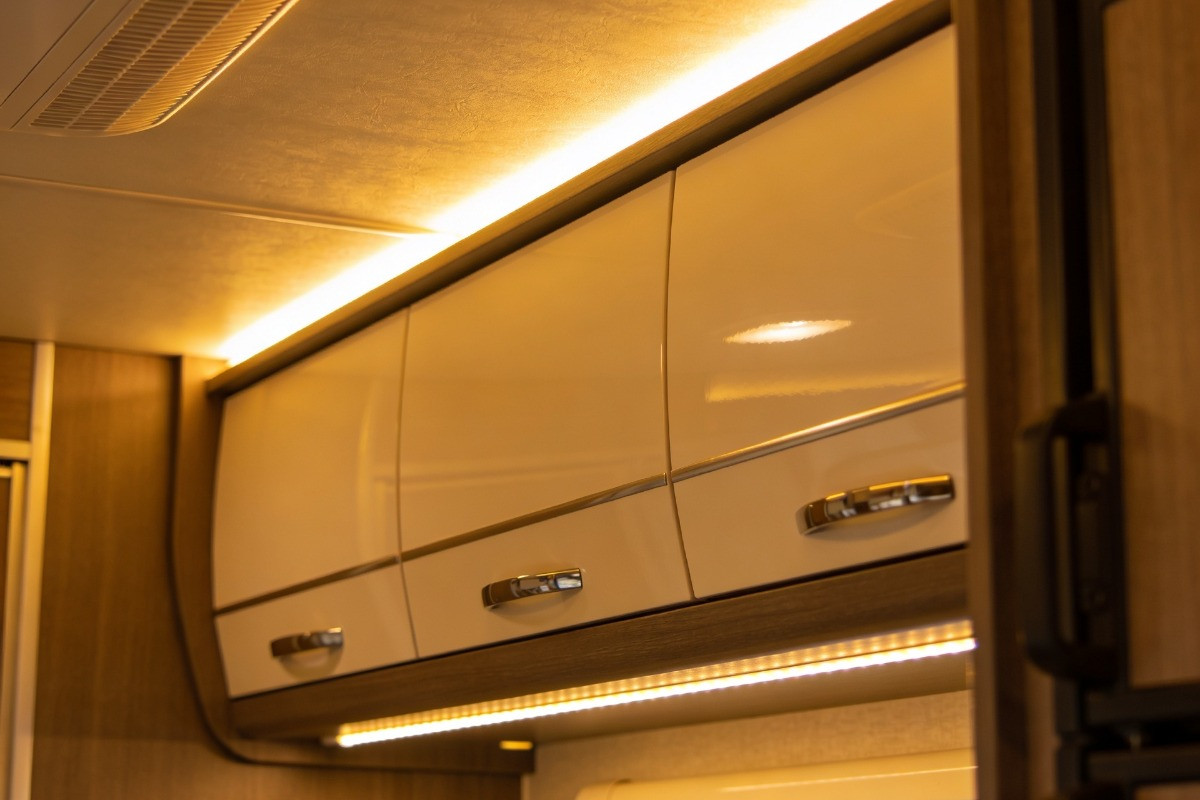
Task lighting can make an even bigger difference than many people expect. A focused light above a stove, sink, desk, or reading chair can make the camper more functional without flooding the whole interior with brightness. This matters at night, when one person may want to read or clean up while someone else is trying to sleep. With the right combination of overhead lights and task lights, your RV can feel more like a well-designed tiny home instead of one room controlled by a few bright switches.
Exterior Lighting Helps Your Campsite Work Better
Exterior lighting is one of the most practical RV upgrades because it improves visibility around the campsite after dark. Entry lights, step lights, awning lights, and storage compartment lights all make it easier to move safely and find what you need. LEDs are especially useful outside because they provide strong light while using less power, which matters when you leave a light on during evening cooking, campfire time, or late arrivals. A brighter, more efficient exterior setup can make the RV feel easier to use from the moment you park.
Exterior lights should be chosen carefully because too much brightness can bother nearby campers or attract unwanted insects. A good setup gives you enough visibility for safety without turning your campsite into a spotlight. Warm or softly diffused LEDs often work better around awnings and entry areas, while brighter lights may be better for utility tasks like hitching, leveling, or checking storage bays. The goal is not simply to make everything brighter, but to put the right kind of light where it helps most.
Should You Replace Bulbs or Fixtures?
Some RV lighting upgrades are as simple as replacing old bulbs with LED equivalents, while others involve changing the entire fixture. Bulb replacement is often the easier path when the existing fixture looks good, works properly, and accepts a compatible LED bulb. This approach can save money while still improving efficiency, reducing heat, and extending bulb life. Before buying replacements, it is important to check the bulb base, voltage, size, brightness, and fixture condition so the new bulb fits and performs correctly.
Full fixture replacement may be the better choice when the old light is damaged, outdated, yellowed, flickering, or poorly placed. Modern LED fixtures can offer cleaner designs, better lenses, dimming options, and more even light distribution than older housings. A new fixture can also help update the look of the camper, especially in visible areas like the living room, bedroom, and bathroom. If you are already refreshing an RV interior, upgraded fixtures can make the space feel more finished than bulb swaps alone.
Common Mistakes to Avoid When Upgrading RV Lighting
One common mistake is choosing LEDs based only on brightness without thinking about color, beam spread, and location. A very bright bulb may seem like an upgrade at first, but it can create glare, harsh shadows, or an uncomfortable feeling inside a compact RV. Another mistake is mixing too many color temperatures in one small area, which can make the interior feel uneven or visually messy. A thoughtful lighting plan should consider how each fixture will look during real use, not just how powerful it seems on paper.
Another issue is buying low-quality bulbs that flicker, fail early, or do not work well with the RV’s electrical system. Some LEDs may interfere with dimmer switches, produce inconsistent color, or fit poorly inside older fixtures. It is also important not to ignore exterior lighting, because a camper can look great inside while still being frustrating to use around the campsite at night. Taking time to choose compatible, reliable lighting can prevent small annoyances from becoming repeated travel-day headaches.
A Better Lighting Setup Makes the Whole RV Feel Newer
Upgrading RV lighting is one of the most approachable ways to improve comfort, efficiency, and style without taking on a major renovation. LEDs usually offer the strongest long-term value because they use less power, produce less heat, last longer, and give owners more flexibility over brightness and color. Traditional lighting can still serve a purpose in certain situations, especially as a short-term replacement or in lightly used fixtures, but most RV owners eventually find that LED upgrades make daily use easier. When the lights work better, the whole camper feels more welcoming.
Berryland Campers helps RV shoppers and owners think beyond the obvious features so they can choose campers that fit the way they actually travel. Lighting may seem like a small detail compared with floor plans, slide-outs, appliances, and towing needs, yet it affects every evening you spend inside or around your RV. Whether you are comparing newer models with built-in LED lighting or looking at ways to refresh a camper you already love, the right lighting choices can make each trip feel smoother, brighter, and more comfortable. A well-lit RV is not just easier to see in, it is easier to enjoy.