
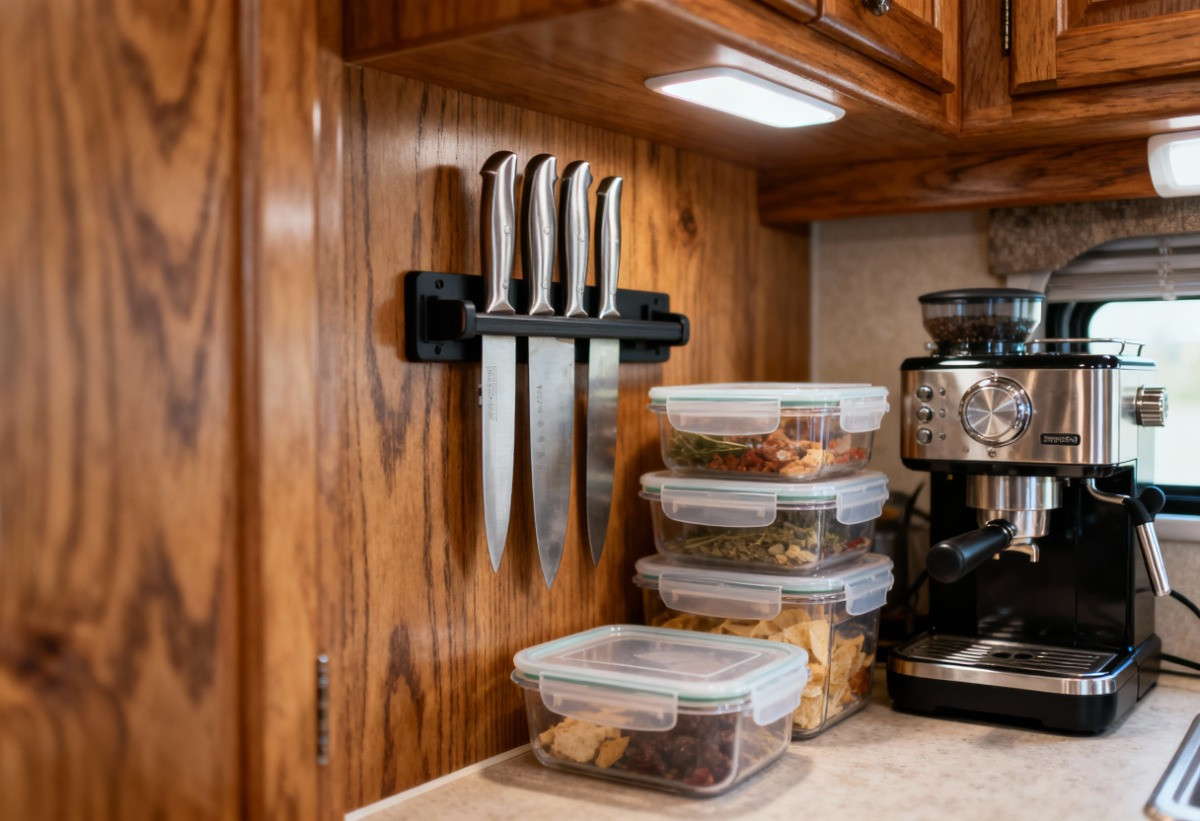
5 Must-Have Kitchen Gadgets for RV Living
A well-equipped RV kitchen can feel like a cozy studio rather than a cramped galley, and the difference usually comes down to choosing a handful of smart tools that pull double duty and pack away neatly. The goal is simple, yet the payoff is big: cook more of what you love, waste less food, clean up faster, and keep the counter clear for the next adventure. This list focuses on five gadgets that deliver real value without swallowing precious storage space.
Why These Five Gadgets Rise To the Top
A great RV gadget earns its spot by doing three things at once, since it should cook well, store small, and clean quickly. The five below also play nicely together, which means they cover most cooking methods you will crave on the road, including sautéing, pressure cooking, baking, air frying, steaming, and blending. Each one has an energy-aware profile, and each one tolerates bumpy travel and tight cabinets.
Durability matters more in a rolling home than it does in a stationary one, so these picks avoid delicate coatings and fussy parts whenever possible. You should be able to rinse, dry, and stash your tools without babying them, then trust that they will not rattle themselves apart on a washboard forest road. That reliability translates into fewer replacements and less clutter over time.
What About Power, Fuel, and Space?
Your campsite will shape your menu, because the available power dictates what you can run at once, and the cabinet layout determines how many pieces you want to haul. Many RVers find success by pairing one electric workhorse with a couple of low-draw or no-power pieces, then they rotate methods based on hookups and battery status. A flexible kit lets you cook confidently whether you are boondocking or plugged in at a resort.
Storage is a second constraint, and it rewards gear that nests, folds, or mounts vertically. If a tool can live on a wall, inside a door, or beneath a shelf, you gain cubic feet you did not know you had. The five gadgets below either collapse flat, stack into themselves, or magnetize to steel, which creates order without expensive cabinetry.
How We Evaluated Each Pick
Function came first, because a compact tool that cooks poorly will never earn your trust. After performance, we weighed energy use, cleaning time, and storage footprint, since those three factors affect your day every time you cook. Safety rounded out the criteria, with special attention to tip resistance, cool-touch surfaces, and secure lids, because spills and burns are more disruptive in tight quarters.
We also favored gadgets that do not demand specialized accessories. If a tool works with the pots you already own or the outlet you already have, it costs you less in money and space. Versatility is not just about recipes, since it is also about how a gadget fits into your actual RV life.
Must-Have #1: The Compact Multicooker
A six-quart multicooker earns the first slot because it replaces a pressure cooker, slow cooker, rice cooker, steamer, and yogurt maker in one footprint. You can braise short ribs on a travel day, pressure cook beans without soaking, or steam vegetables while the main dish rests. When you simmer a soup in the evening, the same pot chills overnight and becomes tomorrow’s lunch with only one insert to wash.
Multicookers shine in RVs because they are sealed, which keeps steam off the cabinets and smells from lingering in fabric. The energy profile is efficient, the cook times are predictable, and the cleanup is limited to a single inner pot and lid gasket. If you only bring one countertop appliance, a multicooker gives you the widest menu with the least hassle.
Must-Have #2: The Single-Burner Induction Cooktop
An induction burner delivers pan-to-food heat with impressive speed, and it does it with far less ambient warmth than a propane flame. That efficiency matters in small kitchens because it keeps the air cooler, which makes summer cooking tolerable and reduces the strain on air conditioning. You also gain precise temperature control, which means fewer scorched sauces and more evenly browned proteins.
Safety is a major perk, since the glass surface does not get as hot as a traditional coil, and the burner cuts power the moment you lift the pan. Most modern induction units draw less energy at lower settings, so you can simmer on minimal power or surge to a quick boil when you have hookups. Pair the cooktop with a single lidded skillet or a small sauté pan, and you can sear, steam, and sauté without monopolizing counter space.
Must-Have #3: The Countertop Air Fryer or Toaster-Oven Combo
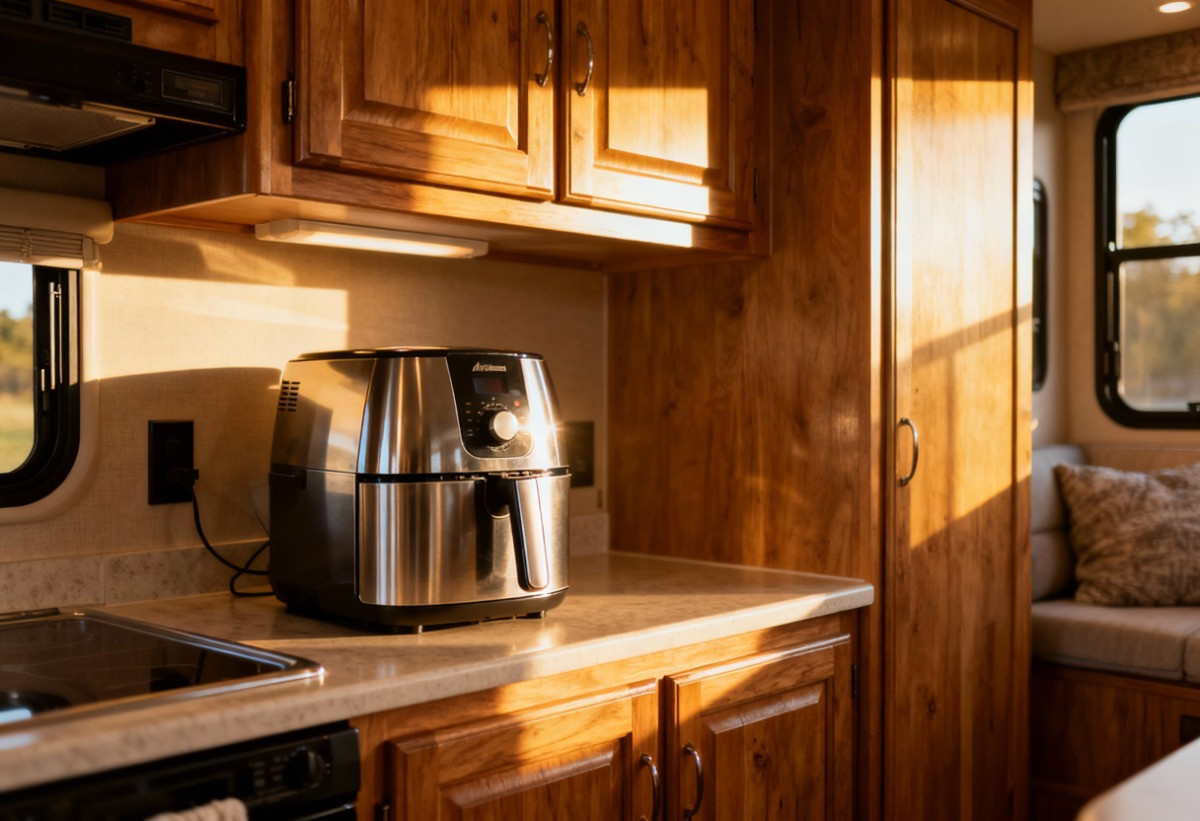
A compact air fryer or toaster-oven combo covers baking, roasting, and crisping without firing up a full oven, which many rigs either lack or avoid using in hot weather. The fan-driven heat creates crackly textures for vegetables and proteins, and it revives leftovers into something that tastes freshly cooked rather than reheated. If you choose a model with a sheet pan and a rack, you can roast chicken thighs below while crisping potatoes above in the same cycle.
Space and power awareness are crucial here, so look for a footprint that fits beneath your cabinets and a wattage that your rig can handle on a single circuit. A good combo unit earns its place by doing toast in the morning, nachos at lunch, and salmon with asparagus at dinner. When a single appliance handles those chores, you eliminate the need to pack a separate oven or a bulky grill.
Must-Have #4: The Collapsible Silicone Prep and Storage Set
Collapsible silicone gear changes the packing game because it shrinks to a fraction of its volume, then pops open to full size when you prep. A nest that includes a mixing bowl, measuring cups, and a colander covers washing produce, draining pasta, and portioning batter without occupying a whole cabinet. When you are finished, the entire set lies nearly flat, which leaves room for pantry staples and cookware.
Silicone also tolerates heat and cold, so many pieces can move from prep to microwave to freezer without cracking or warping. That range helps you batch cook in the multicooker, portion in the bowls, and freeze portions for future stops, all with a minimal dish count. Since the surfaces are nonstick, cleanup is quick, and dry times are short, which matters when you want to stow everything before hitching up.
Must-Have #5: The Magnetic Spice System With Pre-Filled Tins
A magnetic spice rack turns a steel backsplash or the side of a microwave into prime storage, and it keeps flavors within arm’s reach without using a drawer. Pre-filled tins travel better than glass jars, and tight lids prevent leaks during rough roads. When you can season confidently, your simplest pantry staples become satisfying meals, which reduces impulse grocery runs and restaurant detours.
Labeling is your friend in a small space, so a set with clear tops or bold names helps you grab the right flavor the first time. If you cook outdoors, magnets let you move the entire spice lineup to a grill cart or a picnic table, then snap everything back into place after dinner. That mobility keeps cooking fun rather than fussy.
How Do These Five Work Together?
A multicooker handles long or moist cooks while the induction burner sears and sautés, and the air fryer finishes with high-heat texture you usually associate with restaurant ovens. Collapsible tools make prep and storage painless, and the spice system adds personality without bulk. When you combine them, you can plan a week of dinners that alternate methods to balance your power use and your schedule.
Variety keeps morale high on the road, so this mix encourages you to change techniques and textures even when ingredients repeat. Chicken thighs become a pressure-cooked stew one night, a crispy roasted tray bake the next, and a skillet stir-fry later in the week, all from the same pack of meat and vegetables. That kind of rotation saves money, reduces food waste, and fights mealtime boredom.
Power-Smart Cooking Tips for RV Kitchens
Counters often share circuits with outlets and appliances, so running an air conditioner, a microwave, and a high-draw cooker at once can trip a breaker. A simple rule of thumb helps: pair one high-draw device with one low-draw device, or stagger tasks so only one heavy hitter runs at a time. Many campers prep vegetables while the multicooker is in keep-warm mode, then switch to the induction burner for a quick sear.
When boondocking, favor pressure cooking and residual heat, since those methods use energy efficiently and shorten active cook times. If your rig has solar or a large battery bank, schedule energy-intensive cooking during peak sun hours, then coast on keep-warm or no-power prep in the evening. A little planning keeps your meals consistent regardless of hookups.
Storage Strategies That Actually Work
Vertical space is the hidden asset in most RV kitchens, and magnetic strips or adhesive hooks can transform a blank panel into a tool wall. If your air fryer or toaster-oven can live inside a cabinet on a slide-out tray, you gain both safety and convenience, since you can pull it forward to cook and push it back to store. Collapsible bowls and colanders slip into shallow drawers that used to be awkward, which opens deeper cabinets for pots.
Bags and bins keep gadgets from migrating while you drive, and a simple habit helps at the end of each day. Dry every piece fully, secure cords with reusable ties, and return each item to a dedicated zone, because organized gear travels better and rattles less. A quiet galley is a calmer galley, and calm makes cooking more enjoyable.
Cleaning and Care To Keep Gear Road-Ready
Gaskets and seals on a multicooker benefit from a quick vinegar steam cycle once a month, which keeps odors from lingering between savory and sweet recipes. Induction glass wipes clean with a soft cloth and a drop of mild soap, and a microfiber towel prevents hazy streaks that can dull the surface over time. Air fryer baskets clean best when you soak for a few minutes while the unit cools, then scrub with a non-abrasive sponge to protect the nonstick coating.
Silicone pieces avoid staining when you rinse them promptly, and a baking soda paste lifts stubborn color without harsh chemicals. Spice tins keep their strength when you fill them only halfway, since overfilling can jam lids and trap granules in the threads. Maintenance stays simple if you fold it into your nightly reset.
What Can You Cook With Just These Five?
A week of dinners becomes straightforward when your toolkit covers wet heat, dry heat, quick sears, and crisp finishes. Start Monday with a pressure-cooked chili that rests into leftovers for Tuesday, then roast a tray of vegetables and a protein in the air fryer. After a hike on Wednesday, sear shrimp on the induction burner and toss in prepped vegetables with a squeeze of citrus and a dash of spices.
Later in the week, steam rice in the multicooker while a sheet of marinated tofu crisps in the toaster-oven, and set a silicone bowl of greens and vinaigrette on the table for a fresh side. Saturday invites a breakfast bake, where day-old bread and eggs become a frittata that reheats gracefully on Sunday. The same five tools carry you through without feeling repetitive.
Do You Need All Five Right Away?
New RV cooks often start with one or two gadgets and add others as their routines settle, which is a sensible approach when you are learning your rig. If you camp with hookups most of the time, an induction burner and an air fryer will carry a huge load. If you boondock regularly, a multicooker paired with collapsible prep gear and a spice system may offer more flexibility for low-power days.
Budget can guide your pacing, and there is no need to buy premium versions of everything up front. Choose a reliable midrange option that fits your storage and power specs, see how it supports your style of cooking, and upgrade strategically after a season. Measured steps keep your kit lean and your cabinets uncluttered.
Safety Considerations Worth Keeping Front and Center
Level counters reduce spill risk, so check bubble levels on unfamiliar sites before you cook, especially when using liquid-heavy recipes in a multicooker. Power cords should route along walls rather than across prep zones, and silicone trivets protect counters from residual heat after a long bake or fry cycle. Latching drawers keep heavier appliances from shifting, and a simple non-slip mat under an induction cooktop adds stability.
Spices live safely above a cool surface, not above a stove or an oven, since heat can degrade flavor and loosen adhesives. Collapsible tools should always dry fully before collapsing to prevent trapped moisture and musty odors. A small set of smart habits preserves both your gear and your peace of mind.
How To Tailor the Kit for Different RV Layouts
Class C kitchens often benefit from wall-mounted spice systems and a single appliance parked near the dinette on cooking days, since the extra tabletop serves as a landing zone. Fifth-wheel galleys with islands can host an air fryer permanently, while the induction burner tucks into a drawer for travel. Travel trailers gain more space by stowing the multicooker in an under-seat compartment, which keeps heavy weight low and centered.
Think in zones rather than shelves, because a zone carries a purpose that clarifies what earns a spot there. Keep prep near the sink with collapsible tools, keep heat near outlets or propane, and keep flavor on a vertical surface you can reach with wet hands. When every zone has a clear job, cooking becomes smoother and faster.
How Berryland Campers Can Help You Kit Out Your Galley
Choosing gadgets becomes easier when you can see how they fit into real rigs, which is why walking through different floorplans often sparks better decisions than scrolling online. You can measure cabinet openings, check outlet locations, and imagine where cords and baskets will live in daily use. That hands-on perspective saves you from returns and disappointments, and it nudges you toward a system that suits your travel style.
Our team talks kitchens on day one because cooking well on the road keeps trips affordable and enjoyable. Whether you lean toward simple one-pot meals or multi-course weekends, we can help you pair the right gadgets with the right layout so the galley works as hard as the rest of your rig. The right match keeps you cooking with confidence from your first campsite.
Ready To Cook Better in a Smaller Space?
If you want help mapping gear to layouts, stop by Berryland Campers to compare kitchens, measure storage, and pick a floorplan that complements the way you cook. You bring the recipes and the road map, and we will help you assemble a galley that turns everyday ingredients into great camp meals. The road is more delicious when your kitchen is ready for it.