
How to Cook with a Campfire When Traveling in Your RV
Campfire cooking is one of those RV travel skills that looks simple from a distance, then feels like a small superpower once you get the hang of it. Food tastes better outdoors, but the real win is the rhythm: you slow down, you watch the coals, you talk while something sizzles, and dinner becomes part of the trip instead of a chore.
Berryland Campers sees plenty of RV travelers who want the campfire vibe without the chaos, so this guide keeps it practical. You will learn how to plan, build a safe cooking fire, manage heat without knobs, and turn basic ingredients into meals you can repeat at any campground, state park, or boondocking spot that allows flames.
Campfire Cooking Starts Before You Strike a Match
Great campfire meals happen when your prep is calm, because the fire will always demand a little attention and it never reads your schedule. A small plan, like choosing one main dish and one easy side, keeps you from juggling three pans while the wind changes and the sun drops.
Grocery shopping helps more than fancy technique, especially if you lean into ingredients that forgive imperfect heat. Think sturdy vegetables, sausages, burger patties, chicken thighs, tortillas, and pre-mixed seasonings, because campfire cooking rewards simple flavors and smart shortcuts.
Where Can You Have a Campfire on the Road?
Not every stop on an RV trip allows open flames, and even the places that do can change rules quickly when weather turns dry. Campgrounds often post fire restrictions at the check-in station, on signs near the office, or on local park alerts, so a quick check protects your plans and prevents an expensive mistake.
A good backup plan keeps you eating well even if fires are banned, so consider having a propane stove meal ready in your head. Campfire cooking is a highlight, but flexibility is what makes RV travel feel smooth.
Firewood, Charcoal, or a Propane Fire Pit?
Firewood gives you the classic crackle and the smoky aroma that makes hot dogs and foil packets taste like vacation. The tradeoff is variation, since different woods burn hotter or faster, and “seasoned” firewood still surprises people with damp pockets that refuse to light.
Charcoal is the steady option when your main goal is cooking, because it burns with reliable heat and predictable coals. Propane fire pits are often allowed during certain restrictions and they are clean and controlled, but they do not create the same bed of coals for cooking unless you pair them with a separate grill setup designed for propane heat.
Build a Safe, Steady Cooking Fire
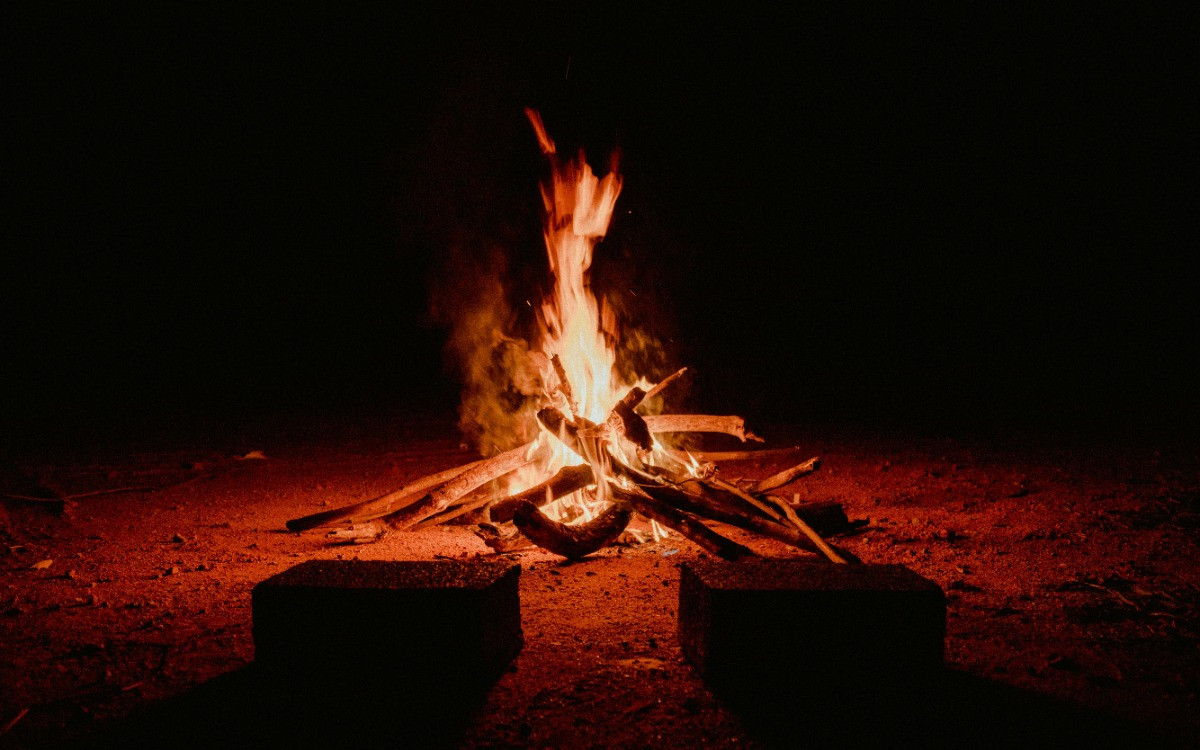
Cooking over tall flames feels dramatic, yet coals do the real work, because they deliver even heat without scorching the outside of your food. Start with a small, hot fire that can burn down into a glowing coal bed, since that coal bed is your cooking surface even if you never touch a grill grate.
A safe setup protects your RV trip from turning into an emergency. Keep the fire in a designated ring when possible, clear loose debris nearby, keep water close, and position chairs and coolers so nobody has to step over the fire area to get where they are going.
How Do You Control Heat Without a Knob?
Heat control is the difference between “campfire dinner” and “burnt outside, raw inside,” and you control it with distance and timing instead of dials. Food closer to the coals cooks faster, food higher cooks slower, and moving your pan six inches can matter as much as turning a stove burner from medium to low.
Wind changes everything, so pay attention to how the fire is breathing. A gust can spike heat, a calm pocket can make your coals fade, and learning to adjust by sliding a grate, rotating a skillet, or scooting coals into a tighter pile will make you feel confident fast.
Two-Zone Cooking Makes Campfire Meals Easier
Two-zone cooking means you create a hot zone for searing and a cooler zone for finishing, and it works whether you are using a grate, a cast iron skillet, or foil packets. You can build it by pushing coals to one side, leaving a thinner layer on the other side, then treating the fire like a simple outdoor oven.
This method keeps meals from getting away from you, because you always have a safe place to move food when it is browning faster than planned. RV campfire cooking gets more relaxed when you stop fighting the fire and start using zones like tools.
The Campfire Kitchen Kit That Makes Life Easier
- Heat-resistant gloves: Grab grates, lift lids, and handle cast iron safely without guessing how hot “warm” really is.
- Long tongs and a sturdy spatula: Turn food without hovering your hands over heat, especially when flare-ups happen.
- Instant-read thermometer: Cook chicken and thick burgers confidently, even when the outside looks finished early.
- Grill grate or grate topper: Create a stable cooking surface when the fire ring design is not ideal.
- Fire poker and small shovel: Shift logs, move coals, and build zones without improvising with sticks.
- Foil and a few disposable pans: Make sides, desserts, and easy cleanup part of the plan instead of an afterthought.
- Small spray bottle and water bucket: Knock down flare-ups and stay ready if the wind changes
Cookware That Works Over Flames
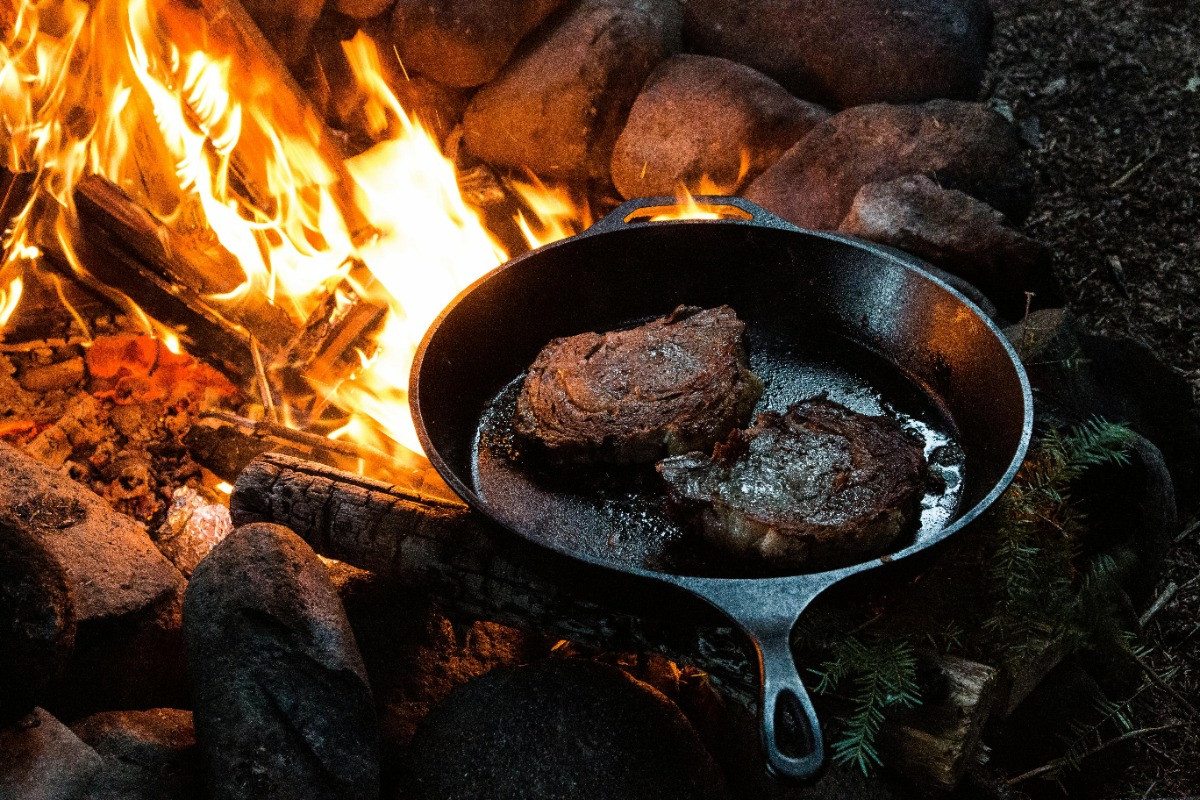
Cast iron is the campfire favorite because it holds heat, forgives uneven coals, and turns simple food into something better. A basic skillet and a lidded Dutch oven can cover breakfast, dinner, and even dessert, which is why many RV travelers treat them like core gear.
Stainless steel can work well too, but thin pans can create hot spots that burn sauces and onions. Nonstick pans are usually a poor match for direct campfire heat, since flames and high temps can damage coatings and create a mess you did not need on your trip.
Foil Packets Keep Dinner Simple
Foil packets are the easiest way to cook a full meal when you want low stress and high reward. You load proteins and vegetables with oil, seasoning, and a splash of something flavorful like broth or lemon, then let the heat do its job while you enjoy the campsite.
The key is building packets with enough space for steam and using a double layer of foil for strength. Place packets near coals rather than inside tall flames, flip once halfway through, and open carefully so steam does not blast your hands when you check doneness.
Cast Iron Meals That Feel Like Real Cooking
A cast iron skillet over coals turns campfire cooking into something that feels like a real kitchen, because you can sauté, brown, and build flavor the same way you would at home. Start with oil, cook onions or peppers first, then add your protein, because layering ingredients helps you control timing when heat is unpredictable.
A Dutch oven shines when you want one-pot comfort food, like chili, stew, or cheesy potatoes, since the lid traps heat and keeps the cook gentle. Coals on the lid matter as much as coals under the pot, so think of it like an oven that you build by hand.
What Should You Cook the First Night?
The first night is the best time to choose a forgiving meal, because you are often arriving, leveling, unloading, and getting your bearings before you even think about dinner. Sausage and vegetables in foil, burgers with a simple side, or tacos built from grilled chicken thighs are easy wins that build confidence.
Save the “big project” meal for night two, when you know how the campsite wind behaves and how the fire ring is designed. RV travel gets better when you match your cooking effort to your energy, especially if you drove a long stretch to get there.
Breakfast Over Coals Feels Like a Treat
Campfire breakfast is worth it because the morning air is cool, the campground is quiet, and a hot skillet makes everyone drift outside. A simple scramble with eggs, cheese, and leftover vegetables works well, since it cooks quickly and does not demand perfect heat.
Hash browns and bacon are possible, but they need patience and a cooler zone so they do not scorch. If you want an easier breakfast, warm tortillas, melt cheese, add eggs, and turn it into breakfast tacos that you can hold in one hand while coffee happens.
How Do You Keep Food Safe While Boondocking?
Food safety matters more when you are far from a store, because one bad meal can derail the whole trip. Keep raw meat cold in a dedicated cooler section, use a thermometer to confirm safe temps, and treat cutting boards like a system, since cross-contamination is the sneaky problem people miss when they cook outside while boondocking.
Leftovers are great for RV travel, but only if you cool them quickly and store them cold. Portion foods into shallow containers, get them back into the cooler soon, and reheat thoroughly, because warm nights and long conversations by the fire can push food into the danger zone faster than you expect.
Clean-Up and Leave No Trace Keep Camping Fun
A smart cleanup plan makes campfire cooking feel easy, because nobody wants to scrub a pan in the dark with cold water. Wipe pans while they are still warm, use a little water and a scraper instead of soaking forever, and keep a dedicated wash bin so your RV sink stays cleaner.
Leave No Trace is also about the fire itself, since leftover trash and half-burned food scraps attract animals and create problems for the next camper. Burn only what is allowed, pack out foil and packaging, drown the fire until coals stop hissing, then stir and repeat until everything is cool to the touch.
A Simple Campfire Meal Flow You Can Repeat
- Set Up: Gather tools, ingredients, water, and a trash bag, because walking back and forth while cooking is where mistakes begin.
- Build Coals: Start a small hot fire, let it burn down, then create hot and cool zones with your poker or shovel.
- Cook in Layers: Sear or brown first, then finish on the cooler side, using a lid or foil when you need gentle heat.
- Check Doneness: Use a thermometer for thick meats and a quick taste test for vegetables, then rest proteins before serving.
- Reset the Site: Clean cookware, store food, pack trash, and extinguish the fire fully so the night stays relaxing.
Common Campfire Cooking Mistakes That Are Easy to Fix
One common mistake is chasing flames, since flames feel powerful but they rarely cook evenly. Focus on coals, move food away from flare-ups, and remember that your best control tool is patience, because rushing is what burns dinner.
Another mistake is starting too late, especially when you arrive hungry and the sun is already dropping. Campfire cooking takes a little runway time, so starting the fire earlier, even if you snack while it builds coals, will make your meal smoother and your campsite calmer.
Make Campfire Meals Part of the Trip
Campfire cooking while traveling in your RV is less about perfection and more about learning the small moves that keep dinner steady, like building a coal bed, cooking in zones, and choosing meals that match the moment. Each night you practice, you get better at reading heat, timing food, and keeping cleanup simple.
Berryland Campers loves seeing RV travelers turn ordinary campsites into places that feel like home, and a good campfire meal does that fast. If you are shopping for an RV, upgrading your setup, or planning your next trip, stop by Berryland Campers and let our team help you travel with confidence and camp with comfort.