

How to Stay Productive While Traveling in an RV
Working from the road sounds dreamy until real life shows up with a weak signal, a noisy campground, a laptop battery at 12 percent, and a meeting that starts in eight minutes. The good news is that RV travel and productivity can absolutely work together, but it takes a little more planning than tossing a laptop onto the dinette and hoping for the best.
For many RV owners, productivity does not mean working a full office schedule from a campsite every day. It may mean answering emails in the morning, managing a small business while traveling, homeschooling kids between stops, keeping up with freelance projects, or simply staying organized enough that life does not feel scattered while you are away from home.
At Berryland Campers, we know RV travel is about freedom, but the right setup can make that freedom feel much more realistic. When your space, schedule, technology, and expectations all work together, you can enjoy the trip without feeling like every work task is fighting against the adventure.
Start With a Realistic Travel Schedule
The biggest productivity mistake many RV travelers make is pretending travel days are normal workdays. They usually are not, especially when you have to pack up the campsite, check tire pressure, empty tanks, secure everything inside, drive several hours, stop for fuel, set up again, and still figure out dinner.
If you know you need to focus, try to separate workdays from driving days whenever possible. A quiet day at a campground with reliable service is much easier to manage than a day spent bouncing between highways, rest stops, and arrival windows.
That does not mean you can never work on a travel day. It simply means your expectations should match the reality of RV life, where weather, traffic, check-in times, and campground setup can easily take more energy than you planned.
Your RV Workspace Should Have a Job
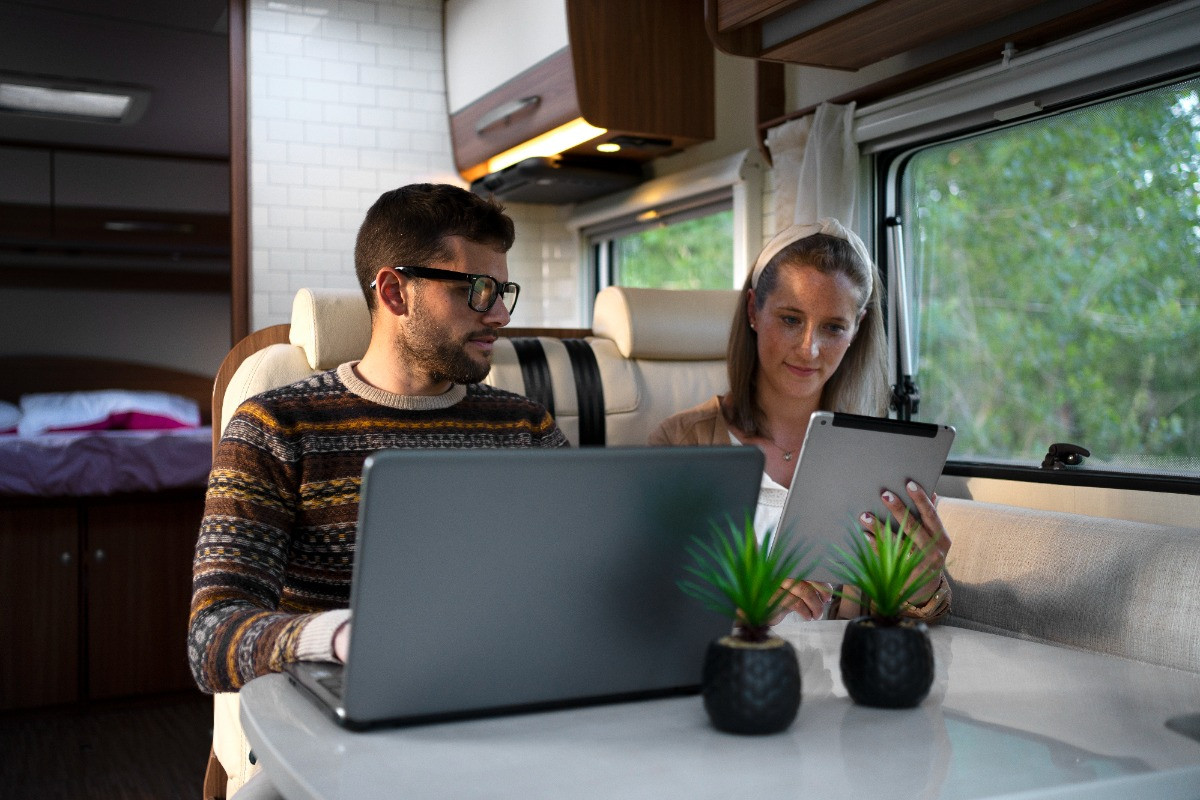
A productive RV workspace does not have to be large, fancy, or perfectly styled. It just needs to be dependable enough that your brain knows, “This is where I work,” even if that space is a dinette, passenger seat, fold-out desk, bunk area, or small table under the awning.
Try not to spread work materials across the whole camper unless you truly need to. When your laptop, notebook, chargers, pens, headphones, and paperwork all have a regular place, it becomes easier to start quickly and stop cleanly, which matters when your living room, dining room, office, and vacation space are all sharing the same square footage.
Comfort matters more than people think, too. If your back hurts, your screen is at a bad angle, or your chair makes every work session feel like punishment, you will probably avoid the tasks you need to finish.
What Kind of Internet Setup Do You Need?
Internet access can make or break productivity on the road, so it is worth thinking about before your trip begins. Campground Wi-Fi can be helpful, but it is often shared by many guests, which means it may slow down at night, struggle with video calls, or work beautifully one day and poorly the next.
Many RV travelers use a mix of options, such as a mobile hotspot, cellular data, campground Wi-Fi, and, in some cases, satellite internet. The best choice depends on where you travel, how much data you need, whether you take video calls, and how important it is for you to stay connected every day.
Before you book a campground, check whether the area has decent coverage for your carrier, especially if you plan to work. A beautiful remote site may be perfect for unplugging, but it may not be the best place to upload files, join meetings, or handle time-sensitive tasks.
Power Planning Keeps Work From Falling Apart
A productive RV trip depends on more than internet. You also need enough power to keep laptops, phones, tablets, cameras, hotspots, and other devices charged without constantly worrying about the next outlet.
If you are staying at full-hookup sites, this is usually simple, although you still need surge protection and a smart charging routine. If you plan to boondock, dry camp, or spend time away from shore power, you will need to think more carefully about batteries, solar, generators, inverters, and how much power your devices actually use.
Small habits help. Charge devices while you are driving, keep backup battery packs ready, avoid letting everything drop to low power at once, and store charging cords where you can find them without digging through three cabinets.
Build a Morning Routine That Travels Well
A good morning routine can keep the whole day from feeling loose and messy. It does not need to look like your routine at home, but it should give you a predictable way to start, especially if you are balancing work, travel, kids, meals, and campground activities.
For some people, that means coffee, a short walk, checking the day’s weather, reviewing tasks, and handling the hardest work before the campground gets busy. For others, it means getting the family fed, walking the dog, cleaning up the camper, and then sitting down for a focused work block.
The exact routine matters less than the consistency. When your morning has a familiar rhythm, your work feels less like an interruption and more like a normal part of the trip.
Use Time Blocks Instead of Vague Intentions
Saying, “I’ll work sometime today,” rarely works well in an RV. There is always something else to do, whether it is exploring town, making lunch, chatting with neighbors, checking the hitch, organizing storage, or taking one more walk because the weather is too nice to ignore.
Time blocking gives your day some structure without turning travel into a rigid office schedule. You might work from 8:00 to 10:30, take a long break for sightseeing, and then check messages again around 4:00.
This approach also helps other people traveling with you. When your family knows when you are working and when you are available, everyone has fewer surprises, fewer interruptions, and less frustration.
Keep Your Task List Smaller Than You Think
RV travel has a way of stretching ordinary tasks. A quick grocery run may involve driving farther than expected, a simple lunch may take longer in a small kitchen, and a short work session may get interrupted by campground noise, weather changes, or a neighbor asking about your camper.
That is why a short, realistic task list is usually better than a long, ambitious one. Pick the few things that truly need to be finished, and let the rest become optional if the day goes smoothly.
A smaller list also gives you momentum. Finishing three important tasks feels much better than carrying around twelve half-finished ones while trying to enjoy the place you traveled to see.
Noise Control Makes Focus Easier
RVs are not soundproof offices, and campgrounds are not libraries. You may hear kids riding bikes, dogs barking, golf carts passing, music playing, rain hitting the roof, or your own family moving around a few feet away.
Good headphones can make a huge difference, especially if you take calls or need deep focus. A small fan, white noise app, or quiet background music can also help soften distractions inside the camper.
It helps to choose your work time around campground patterns. Early mornings are often quieter than afternoons, while evenings may be better for light admin tasks than serious concentration.
How Do You Work With Kids in the RV?
Working while traveling with kids takes patience, flexibility, and honest expectations. Even well-behaved children need attention, snacks, help finding things, reminders about noise, and a clear idea of what they can do while you are busy.
Create simple rules for work blocks. You might explain that headphones mean “do not interrupt unless it is important,” or that a certain hour is quiet reading, schoolwork, drawing, or outdoor play time near the campsite.
Shorter work sessions often work better with children than long ones. Instead of trying to disappear into a four-hour block, you may get more done by working in focused stretches and reconnecting with the family between them.
Keep the RV Organized Enough to Think Clearly
Clutter feels louder in an RV because there is less space to absorb it. A few cups, shoes, charging cords, jackets, toys, and grocery bags can make the whole camper feel chaotic, which makes it harder to settle into productive work.
A simple reset once or twice a day can help. Clear the dinette, put chargers back in one place, move dishes to the sink, throw away trash, and return travel items to their usual storage spots.
This does not have to become a major cleaning project. The goal is not perfection; it is just enough order that your mind can focus on the task in front of you instead of the mess around you.
Plan Meals Before Work Gets Busy
Food can interrupt productivity faster than almost anything else, especially when everyone gets hungry at the same time. In an RV, where counter space is limited and grocery storage matters, last-minute meals can become more complicated than they need to be.
Keep easy breakfasts, simple lunches, and low-effort dinners available for busy workdays. Sandwiches, wraps, reheatable meals, fruit, snacks, and prepped ingredients can save a surprising amount of time.
It also helps to decide which days are cooking days and which days are convenience days. A long workday may not be the best time to make a complicated meal from scratch, and that is perfectly fine.
Choose Campgrounds With Productivity in Mind
Not every campground is ideal for work, even if it is perfect for vacation. If you need reliable productivity, look for places that offer strong cell coverage, level sites, full hookups, quiet hours, laundry, nearby groceries, and enough space that you do not feel packed too tightly against your neighbors.
Location matters, too. A campground close to town may be more practical during a work-heavy week, while a remote scenic spot may be better for a weekend when you can unplug.
When possible, stay longer in one place instead of moving constantly. Longer stays give you time to settle into a rhythm, learn the area, and spend less energy on setup and teardown.
Protect Your Work From Travel Surprises
RV travel comes with moving parts, both literally and figuratively. Devices can shift during travel, coffee can spill, batteries can die, and campground power can be less predictable than the outlet at home.
Back up important files, use protective cases, keep electronics away from sinks and windows, and store laptops securely before you drive. If you handle client work, school records, business documents, or financial information, make sure your devices are password-protected and your data is backed up somewhere safe.
A little preparation can save you from a very bad day. Nobody wants to arrive at a beautiful campsite and realize the laptop they need was damaged because it slid off the dinette during the drive.
Give Yourself Permission to Stop Working
Productivity matters, but so does the reason you bought or rented the RV in the first place. If every beautiful view becomes a background for answering emails, the trip can start to feel like an office with wheels instead of a chance to enjoy something different.
Set a stopping time when you can. Close the laptop, silence work notifications, take a walk, start dinner, sit outside, or go explore the campground without feeling guilty.
Rest is not wasted time. In fact, one of the best parts of RV travel is that a change of scenery can help you return to work with more energy, especially when you allow yourself to actually enjoy where you are.
The Right RV Makes Productive Travel Much Easier
Some RVs are simply better suited for working on the road than others. A comfortable dinette, good lighting, smart storage, accessible outlets, quiet sleeping areas, and enough room for everyone to function can make a major difference in your day-to-day experience.
When you shop for an RV, think about more than where everyone will sleep. Ask where you would place a laptop, where you would take a call, where the kids would sit during quiet time, and whether the layout still works when someone is cooking, someone is working, and someone else is trying to relax.
Berryland Campers can help you compare RVs with real travel habits in mind, not just showroom impressions. Whether you are planning weekend trips, extended vacations, remote work travel, or a more flexible lifestyle, the right camper can make productivity feel natural instead of forced.
Berryland Campers Helps You Travel, Work, and Relax With Confidence
Staying productive while traveling in an RV is really about balance. You need dependable systems, a comfortable space, realistic routines, and the flexibility to adjust when the road does what the road does.
With the right RV and a little planning, you can answer emails in the morning, explore in the afternoon, and still feel like the trip is giving you more freedom rather than more stress. That balance is where RV travel really starts to shine.
At Berryland Campers, we help travelers find RVs that fit the way they actually live, work, and vacation. When your camper supports your routine, your family, your technology, and your travel goals, productivity on the road becomes much easier, and the adventure feels a lot more enjoyable.