

How to Travel Sustainably in an RV (Eco-Friendly Tips)
RV travel gives you the freedom to spend more time outdoors, visit places that are far from major tourist centers, and carry many of the comforts of home along with you. That freedom does come with an environmental footprint, though, especially when fuel use, campground resources, waste, and energy consumption are all added together over a long trip.
The good news is that traveling more sustainably does not require turning every vacation into a complicated environmental project. Most of the biggest improvements come from practical habits that also make RV travel more efficient, less wasteful, and sometimes less expensive. A little more planning before you leave can reduce fuel consumption, conserve water, cut down on disposable products, and help you enjoy the places you visit without leaving as much behind.
Start With a More Efficient Route
One of the easiest ways to reduce the environmental impact of an RV trip is simply to avoid driving farther than necessary. Large detours, backtracking, and repeatedly moving between distant campgrounds all burn additional fuel, so mapping out a logical route before departure can make a noticeable difference over the course of a long trip.
That does not mean every journey needs to follow the shortest possible line between two points. Scenic drives and spontaneous stops are part of the fun, but grouping destinations by region can help you enjoy those experiences without covering the same ground several times. Staying a little longer at each campground can help as well, since fewer travel days naturally mean fewer miles driven.
Driving Habits Matter More in an RV
Fuel economy becomes especially important when you are moving a large motorhome or towing a trailer because the weight and aerodynamic drag involved are considerably greater than they are in a passenger car. Smooth acceleration, steady speeds, and anticipating traffic ahead can reduce unnecessary fuel use while also making the drive more comfortable.
Tire pressure matters for the same reason. Tires that are not properly inflated can increase rolling resistance, which makes the vehicle work harder, and they can also contribute to uneven wear or handling problems. Checking pressures before departure and monitoring them during longer trips helps support both efficiency and safety.
Pack Lighter Without Giving Up What You Need
It is surprisingly easy to load an RV with things that seemed useful at home but never leave their storage compartments once the trip begins. Every unnecessary item adds weight, and although a few extra pounds will not make a meaningful difference by themselves, hundreds of pounds of rarely used gear can add up.
A better approach is to think about what you actually use on the road and what can reasonably be left behind. If you have been RVing for a while, past trips can tell you a lot about which cookware, tools, clothing, and outdoor gear deserve permanent space in the RV and which items keep making the trip without ever being touched.
Traveling light should never mean sacrificing preparedness, though. Safety equipment, essential tools, emergency supplies, and anything required for your specific RV still deserve their place. The goal is to cut clutter, not to leave yourself without something important when you need it.
Use Campground Electricity Thoughtfully
When you connect to shore power, it can be tempting to treat electricity as unlimited because you are no longer watching a battery monitor. Campgrounds still have to supply that energy, though, so small conservation habits remain worthwhile even when you are not directly paying attention to every watt.
Turning off lights in areas you are not using, unplugging appliances that do not need to remain powered, and avoiding excessive heating or cooling are all simple ways to reduce consumption. Closing shades during the hottest part of the day can help keep heat out, while opening windows during mild weather may let you avoid running the air conditioner altogether.
These habits also become more useful during periods of heavy campground demand. On especially hot days, for example, many RVs may be running air conditioners at the same time, so using electricity efficiently can reduce unnecessary strain while keeping your own coach more comfortable.
Can Solar Power Make RV Travel Greener?
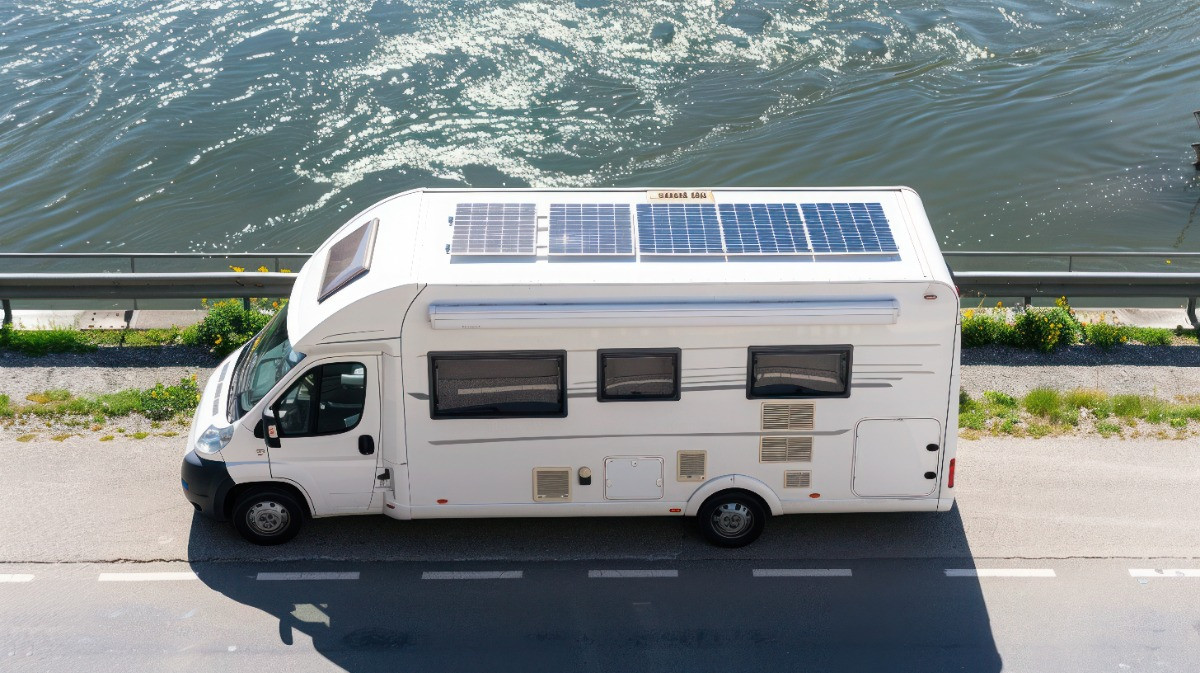
Solar panels can reduce how often you rely on generators or campground electricity, particularly when you spend time boondocking or camping away from full hookups. A properly matched system can recharge batteries during daylight hours and support everyday electrical needs without requiring an engine or generator to run.
How much solar you need depends heavily on the way you travel. Someone who mainly wants to power lights, charge devices, and run smaller appliances will have very different requirements from someone trying to support a larger electrical load for long periods.
Battery capacity matters just as much as the panels themselves because solar generation is only useful if you have somewhere to store that energy. Weather, shade, season, and campsite orientation can all affect output as well, so it is better to think of solar as part of a larger electrical system rather than as an unlimited source of power.
When solar, efficient appliances, sensible power use, and adequate battery storage are combined, however, the result can be fewer generator hours and more flexibility in where you camp. For travelers who spend a lot of time away from hookups, that can make a meaningful difference.
Water Conservation Goes a Long Way
Fresh water is one of the most valuable resources you carry in an RV, especially when you are camping without hookups. Conserving it reduces waste, but it also lets you stay away from refill stations longer, which can make remote or extended stays much easier.
Shorter showers, turning off the faucet while brushing your teeth, washing dishes in a filled basin instead of under constantly running water, and repairing leaks quickly can all make a noticeable difference. Low-flow fixtures can help as well, provided they still deliver enough pressure to be useful.
Using less fresh water has another benefit because it slows the rate at which your gray-water tank fills. That means you may be able to stay in place longer before needing to visit a dump station, so conservation becomes both an environmental habit and a practical one.
Reduce Single-Use Products
Disposable plates, cups, plastic utensils, and bottled drinks are convenient, but they can create a surprising amount of trash during even a short RV trip. Reusable dishes, insulated bottles, washable utensils, and food-storage containers require a little more cleanup, yet they can significantly reduce how much waste you generate along the way.
The key is choosing reusable items that fit the realities of an RV kitchen. A compact set that stacks neatly into a cabinet is usually far more useful than bringing the same number of dishes you keep at home, especially when storage space is limited.
Shop Locally Along the Way
One of the more enjoyable ways to make an RV trip a little more sustainable is to buy some food and supplies locally. Farmers markets, roadside stands, independent grocers, and regional businesses can introduce you to products from the places you are visiting while also reducing the need to haul every grocery item from home.
Buying along the way can help with weight and storage, too. Instead of packing several weeks of perishables at once, you can replenish food as you move from one destination to the next, which often makes the refrigerator and pantry easier to manage.
Cook With Less Waste
Food waste can become a problem in an RV because refrigerator and pantry space is limited, which makes it easy for ingredients to get forgotten or spoil. Planning a handful of meals before you shop can help you buy quantities that are more realistic for the length of your trip.
It also helps to choose meals that share ingredients. Vegetables left from one dinner can become part of lunch the next day, while grains, sauces, and other staples can be used across several meals instead of sitting untouched in the back of a cabinet.
Keeping food organized makes that planning easier because you can quickly see what you already have. When ingredients are visible and easy to reach, you are less likely to buy duplicates or discover something only after it is no longer usable.
Be Careful With Wastewater
Responsible wastewater disposal is one of the most important parts of environmentally considerate RV travel. Black and gray water should be emptied only at approved dump stations or properly equipped campsites, where the waste can enter systems designed to handle it.
Gray water should not be treated as harmless simply because it does not come from the toilet. It can contain soap, food particles, grease, cleaners, and other substances that should not necessarily be released onto the ground.
Maintaining the holding-tank system also matters because leaks create problems for both the RV and the campsite. Using appropriate products, inspecting connections, and keeping hoses and fittings in good condition can make dumping cleaner, easier, and more reliable.
Choose Cleaning Products With the Campsite in Mind
Cleaning products eventually have to go somewhere, whether they are rinsed into the gray-water tank or used around the exterior of the RV. Choosing effective products without using more than necessary can reduce the amount of harsh residue entering wastewater systems.
Labels such as "green" or "eco-friendly" do not automatically make a product appropriate for every situation, so the simplest approach is usually to use only what you need and follow campground rules about washing and wastewater. Avoid dumping cleaning solutions outdoors, and keep exterior washing to approved areas when campgrounds have specific restrictions.
Keep Your Campsite as You Found It
Sustainable travel also extends beyond what happens inside the RV. Staying on established roads and campsites protects vegetation, while keeping vehicles, mats, and equipment within designated areas helps reduce unnecessary soil damage and erosion.
Trash should leave with you unless the campground provides appropriate disposal. Lightweight packaging, paper products, and food wrappers can blow away surprisingly easily, so keeping the site organized throughout your stay is easier than trying to hunt everything down when it is time to leave.
Food also deserves special attention because scraps can attract wildlife and change animal behavior. Even something that seems harmless, such as leaving bits of food near the edge of a campsite, can encourage animals to associate people with an easy meal.
If you use a fire ring, follow local fire rules and make sure the fire is completely out before leaving it unattended. Conditions can change quickly during dry weather, so campsite responsibility includes paying attention to local restrictions rather than assuming the rules are the same everywhere you travel.
Give Wildlife Plenty of Space
Seeing wildlife is often one of the highlights of RV travel, especially when you camp near forests, mountains, deserts, or national parks. The best way to enjoy those encounters responsibly is to observe animals from a distance rather than approaching them for a closer look or photograph.
Food storage is part of that responsibility as well. In areas with bears or other animals that have learned to investigate campgrounds, follow local storage requirements carefully and keep the campsite clean. Preventing wildlife from associating people with food helps protect campers and the animals themselves.
Maintain Your RV Instead of Replacing Things Early
Sustainability is not only about what you consume during a trip. Taking care of the RV and equipment you already own can extend their useful lives, reduce waste, and help you avoid replacing expensive components sooner than necessary.
Routine maintenance on tires, seals, appliances, batteries, plumbing, and mechanical systems can catch small problems before they become major failures. Exterior maintenance is equally important because neglected seals or roof components can allow water intrusion, which may cause damage far beyond the original problem.
A well-maintained RV is also more likely to operate efficiently. Appliances that work properly, tires that are correctly maintained, and systems that are not struggling against preventable problems all contribute to a smoother trip with less waste.
Spend More Time in Each Destination
Constantly moving can make an RV trip feel busy, and it also increases fuel consumption. Staying several nights at one campground gives you more time to explore the surrounding area without repeatedly packing up and moving the entire RV.
Once you are settled, walking, biking, using local transportation, or combining errands into a single drive can further reduce unnecessary mileage. You may also find that slower travel lets you experience more of a destination because you are not spending so much of the trip preparing for the next departure.
For many RVers, that slower pace is not a sacrifice at all. It can make the trip feel more relaxed while reducing the amount of fuel and energy spent getting from one place to another.
A Few Small Changes Can Add Up
No single choice will make RV travel completely impact-free, and sustainable travel does not need to become a competition over who uses the least water or drives the fewest miles. A more realistic goal is to notice where waste can be reduced without taking away the reasons you enjoy RVing in the first place.
Driving efficiently, conserving water, reducing disposable products, maintaining your RV, and treating campsites responsibly are all manageable habits on their own. Put together, they can make your trips more efficient while helping protect the places you traveled to enjoy.
Find an RV That Fits the Way You Want to Travel
Berryland Campers can help you compare RV styles, floor plans, and features based on how you actually plan to travel. Whether sustainability is one of your biggest priorities or you simply want a more efficient way to enjoy the road, choosing an RV that fits your needs makes it easier to avoid carrying, powering, and maintaining more than you really need. We look forward to seeing you on our lots to outfit your next adventure!