
How to Handle Unexpected Breakdowns on the Road
A road trip in an RV or camper should feel like freedom, not frustration, which is why an unexpected breakdown can shake even the most prepared traveler. One minute you are thinking about the next campground, the next fuel stop, or the snacks in the cooler, and the next minute you are listening to a strange sound, watching a warning light, or realizing something is not right with your vehicle.
The good news is that a breakdown does not have to ruin the entire trip, especially when you know how to respond calmly and safely. Whether you are traveling in a motorhome, pulling a travel trailer, or heading out with your family for a weekend getaway, a little planning can help you protect your passengers, your camper, and your peace of mind.
Stay Calm Before You Start Solving the Problem
The first few minutes after something goes wrong matter, not because you need to fix everything instantly, but because you need to make smart decisions while everyone is still getting oriented. When a tire blows, the engine overheats, the brakes feel strange, or the camper starts handling differently, it is natural to feel your heart jump, yet panic usually makes the situation harder to manage.
Take a breath, keep both hands steady, and focus on controlling the vehicle before you think about anything else. If you are towing a camper, avoid sudden steering corrections, hard braking, or quick lane changes, since the added weight behind you can make the whole setup respond differently than a standard passenger vehicle.
What Should You Do First?
Your first priority is getting out of moving traffic, even if the problem seems minor. Turn on your hazard lights as soon as it is safe, reduce speed gradually, and look for the nearest shoulder, parking lot, wide driveway, rest area, or exit ramp where you can stop without blocking traffic.
Once you are stopped, think carefully before anyone opens a door. On a busy highway, the safest place may be inside the vehicle with seat belts fastened, especially if traffic is flying past only a few feet away; on a quieter road, it may be safer to move passengers well away from the vehicle, behind a guardrail if one is available.
After everyone is safe, you can begin figuring out what happened. This is the point where you check for obvious signs, such as smoke, steam, leaking fluids, low tire pressure, a dragging part, loose cargo, or a strange smell, while remembering that you do not have to diagnose the entire problem on the roadside.
Make Yourself Visible to Other Drivers
Visibility is one of the most overlooked parts of roadside safety, partly because people are usually focused on the mechanical issue itself. Your hazard lights are important, but they may not be enough, especially at night, in rain, around curves, or on roads where drivers have little time to react.
Keep reflective triangles, road flares, or LED warning lights in your RV or tow vehicle, and place them far enough back to give approaching drivers time to slow down. If you are on a hill, curve, or narrow shoulder, extra visibility matters even more because other drivers may not see your vehicle until they are already close.
It also helps to make passengers visible without letting them wander. Bright clothing, flashlights, and staying together in one safe area can make a big difference, particularly when children, pets, or older family members are part of the trip.
A Flat Tire Requires More Than a Quick Jack
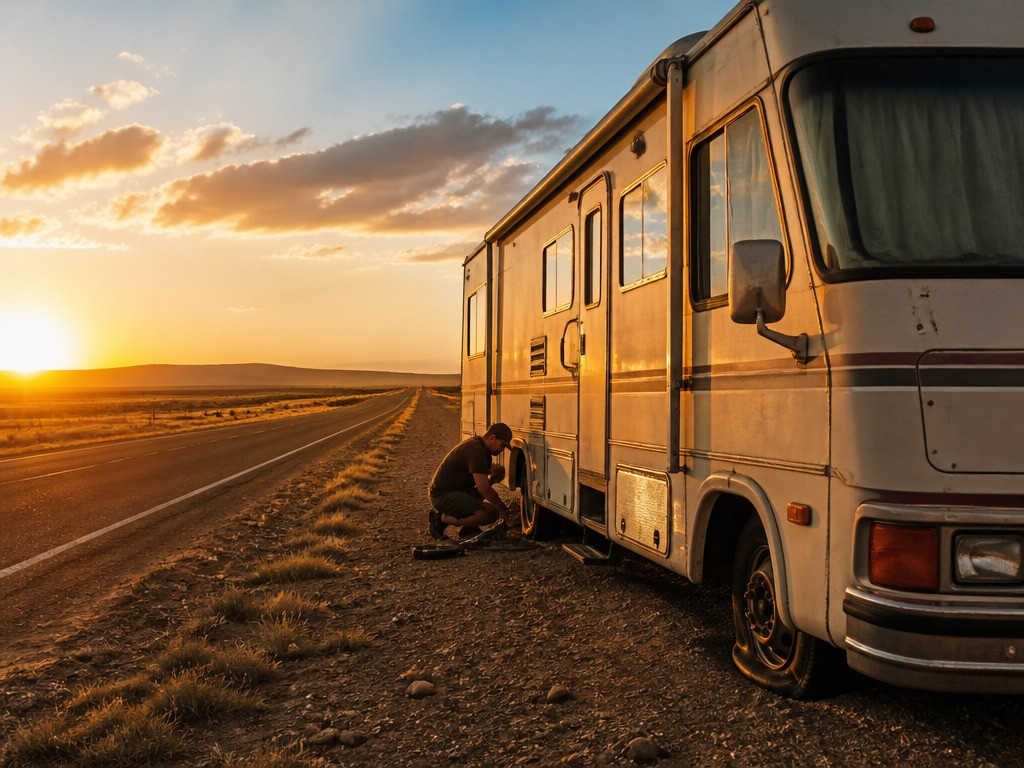
A flat tire on an RV, camper, or tow vehicle is not always as simple as changing a tire on a sedan, since weight, road grade, traffic, wheel size, and clearance all affect whether the repair is safe to attempt. Even if you have a spare, the right tools, and experience, you should never change a tire on the traffic side of a busy highway unless there is no safer option.
Before touching anything, check whether the ground is level and firm enough to support the jack. Soft gravel, sloped pavement, wet grass, or unstable shoulders can turn a routine tire change into a dangerous situation, especially with a heavy camper or motorhome.
If the tire failure happened on your trailer, pay attention to nearby damage as well. A blown tire can tear wiring, damage fenders, loosen underbelly material, or affect brake components, which is why it is smart to inspect the area carefully before continuing the trip.
Engine Overheating Is a Sign to Stop, Not Push Through
When the temperature gauge climbs or you see steam coming from under the hood, it is tempting to keep driving until the next exit looks more convenient. That gamble can turn a manageable overheating problem into serious engine damage, especially when you are climbing hills, towing extra weight, or driving in hot weather.
Pull over safely, turn off the engine, and give everything time to cool before opening the hood. Never remove a hot radiator cap, because pressurized coolant can spray out and cause severe burns.
While you wait, think about what may have contributed to the problem. Heavy towing, low coolant, a failing fan, a clogged radiator, steep terrain, or stop-and-go traffic can all raise engine temperature, and even if the vehicle cools down enough to move, you may still need professional service before continuing far.
Brake Problems Should Always Be Treated Seriously
If your brakes feel soft, smell hot, vibrate, grind, or take longer than usual to stop the vehicle, do not assume you can simply drive more carefully until the trip is over. Brakes carry a heavy workload when you are towing or driving a loaded RV, and small warning signs can become serious quickly when hills, traffic, or emergency stops enter the picture.
Find a safe place to stop and let the brakes cool if you suspect overheating, especially after long downhill stretches. If the brake pedal sinks, the vehicle pulls sharply, or you hear metal-on-metal grinding, it is usually safer to call for help than to continue driving.
Travel trailer owners should also pay attention to trailer brake controllers. A disconnected plug, incorrect gain setting, wiring issue, or weak trailer brake response can make the tow vehicle do too much of the stopping, which increases wear and reduces control.
Electrical Issues Can Be Confusing on the Road
RV and camper electrical problems can feel especially frustrating because they may affect comfort, safety, or basic travel functions. A dead battery, failed converter, bad connection, blown fuse, loose shore power cord, or malfunctioning lights can leave you wondering whether the issue is with the camper, the tow vehicle, or the campground hookup.
Start with the simple checks before assuming the worst. Make sure plugs are fully seated, battery disconnect switches are in the correct position, fuses are intact, breakers are not tripped, and exterior lights are working before you get back on the road.
If the problem involves burning smells, melted wires, repeated blown fuses, sparking, or heat around a panel or outlet, stop using that system until it can be inspected. Electrical problems are not the place for guesswork, especially in a camper where wiring, batteries, propane appliances, and family living space are all close together.
When Should You Call Roadside Assistance?
Calling roadside assistance is not admitting defeat; it is often the safest and most efficient choice. If you are on a busy highway, dealing with a large RV, towing a camper, facing bad weather, traveling at night, or unsure whether the vehicle is safe to drive, professional help is worth it.
Before you call, gather the information that will help the dispatcher send the right assistance. Note your location, direction of travel, nearest mile marker or exit, vehicle type, camper type, tire size if relevant, and whether you need towing, a tire change, fuel, a jump-start, or mechanical help.
It is also wise to confirm whether the service provider can handle RVs or trailers. Not every tow truck is equipped for a motorhome, fifth wheel, or travel trailer, and asking the question early can save a lot of time.
Keep an Emergency Kit That Matches the Way You Travel
A good emergency kit should fit your actual trips, not just a generic checklist. For RV and camper travel, that means carrying items that help with vehicle trouble, passenger comfort, weather delays, and minor repairs.
Useful basics include reflective triangles, flashlights, extra batteries, gloves, tire pressure gauge, portable air compressor, first aid kit, phone charger, bottled water, basic tools, jumper cables, duct tape, zip ties, paper towels, and a fire extinguisher. For longer trips, add blankets, rain gear, extra medications, pet supplies, snacks, and printed copies of important phone numbers.
Do not forget items specific to your camper. Spare fuses, leveling blocks, a sewer cap, freshwater hose washers, wheel chocks, a torque wrench, and a basic multimeter can solve or clarify many small problems before they turn into bigger delays.
Simple Checks Can Prevent Many Roadside Problems
Many breakdowns feel sudden, but the warning signs often start earlier. Before a trip, walk around your camper and tow vehicle slowly, looking at tires, lights, hitch connections, safety chains, propane compartments, storage doors, roof edges, and anything that could loosen while driving.
Check tire pressure when the tires are cold, including the spare. Camper tires can age out before the tread looks worn, so sidewall cracking, uneven wear, bulges, and old date codes deserve attention before you put highway miles on them.
Inside the camper, secure loose items, latch cabinets, close vents, turn off appliances that should not run during travel, and make sure slides, awnings, steps, and jacks are fully retracted. These small habits may not feel exciting, but they can prevent the kind of roadside surprises that make a trip stressful.
Know When Not to Keep Driving
One of the hardest decisions during a breakdown is whether to continue to the next town, campground, or service center. It may be reasonable to drive slowly for a short distance after a minor issue, but only if the vehicle handles normally, no warning lights are worsening, no fluids are leaking, and you are confident the problem is not affecting steering, braking, tires, or engine temperature.
Stop driving immediately if you smell fuel, see smoke, lose brake performance, notice severe vibration, hear loud grinding, see a tire coming apart, or feel the vehicle pulling in a way that makes it difficult to control. A delayed repair is frustrating, but damage from pushing too far can be much more expensive.
When in doubt, choose safety over schedule. Campground reservations, dinner plans, and arrival times can be changed; your family’s safety cannot be replaced.
Keep Passengers Comfortable While You Wait
Breakdowns are easier to manage when the people traveling with you feel informed and cared for. Children may be scared, pets may get restless, and adults may become frustrated, especially if the weather is hot, cold, wet, or dark.
Give everyone a simple explanation of what is happening and what you are doing next. You do not need to make promises you cannot control, but saying, “We are safe, I have called for help, and we are going to wait here together,” can lower the stress level quickly.
Use the supplies you packed to keep everyone comfortable. Water, snacks, blankets, shade, phone chargers, and a calm tone can turn a roadside delay from a family meltdown into an inconvenient but manageable pause.
Berryland Campers Helps Travelers Prepare Before the Trip
The best time to think about breakdowns is before you are sitting on the shoulder of the road. When you work with a knowledgeable RV and camper team, you can ask better questions about towing setup, tire care, maintenance schedules, accessories, safety equipment, and the features that matter for the way your family travels.
Berryland Campers understands that buying or owning a camper is not just about the floor plan, the finishes, or the sleeping space, although those things certainly matter. It is also about feeling confident when you pull out of the driveway, knowing your camper is ready for the road, and understanding what to do when travel does not go exactly according to plan.
Whether you are shopping for your first RV, upgrading to a different camper, or getting ready for another season of travel, it helps to have guidance from people who understand real road trips. A little preparation can make unexpected problems less intimidating, and when your camper is ready, your tools are packed, and your safety plan is clear, you can get back to enjoying the journey instead of worrying about what might go wrong.