
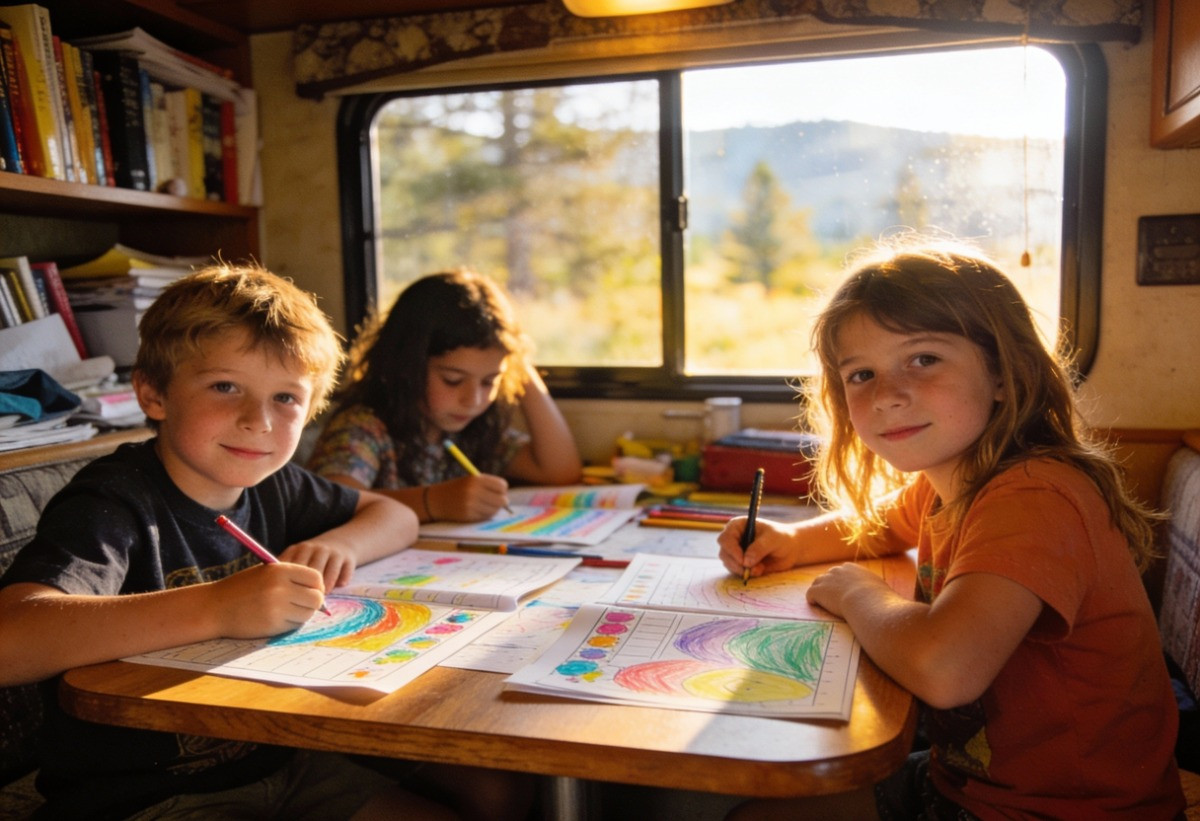
Homeschooling on the Road: Tips for RVing Families
Homeschooling on the road feels different because the “classroom” keeps moving, which can be a gift if you treat flexibility as a feature instead of a problem to solve. Many RVing families find that learning gets easier once the goal becomes steady progress rather than perfect days, since travel brings surprises that no planner can fully predict.
Roadschooling also invites you to notice what your kids already do well when life is hands-on, like asking questions at museums, navigating maps, budgeting snack money, or spotting patterns in weather and geography. Those moments count, and when you name them as learning, your kids start to see themselves as capable students in a world that is bigger than a desk.
A helpful mental shift is separating “school time” from “learning time,” because RV life blends subjects naturally. Cooking becomes math and science, hiking becomes biology, and a conversation with a park ranger becomes civics, which means the day can still feel like a win even when the formal lesson happens later than planned.
What Does Your State Require for Homeschooling While Traveling?
Homeschool rules vary by state, and families who move frequently usually pick one state as their legal home base and treat it as the anchor for compliance. That might be the state on your driver’s license, your vehicle registration, or your domicile setup, and it matters because reporting, testing, or portfolio expectations can change depending on where you claim residency.
Some RVing families worry that crossing state lines changes their homeschool requirements week to week, yet the reality is usually simpler once a domicile is established. A short stay in another state often does not mean you must switch legal systems, although long-term moves can complicate that picture, which is why keeping your residency decisions clear can reduce stress.
A practical habit is creating a one-page “compliance checklist” that lives in your school binder, with notes like attendance expectations, recordkeeping preferences, and any annual deadlines. When homeschooling on the road gets busy, that single page keeps you from wondering whether you forgot something important.
Build a Weekly Rhythm, Not a Rigid Bell Schedule
A dependable rhythm is the secret sauce for RVing families, because kids relax when they can predict the shape of the week even if the scenery changes. Many families do better with a simple pattern, like focused lessons on non-travel mornings, lighter work on travel days, and longer projects on days when the campsite feels calm and settled.
Time blocks work well in small spaces because they prevent school from taking over the whole day, and they also keep you from stretching lessons into an endless loop of interruptions. When you choose a start time, a stop time, and a short list of priorities, you can wrap up with a sense of completion instead of chasing perfection.
Curriculum That Travels Well
The best curriculum for homeschooling on the road is the one that survives real life, meaning it fits your storage, your kids’ attention spans, and your energy after a long drive. Many roadschoolers prefer a blend of structured core subjects and flexible electives, because math and reading thrive on consistency while history and science can flex with destinations.
Look for resources that work across multiple ages, like read-aloud novels, map studies, nature journals, and family discussions that invite younger kids to listen while older kids dig deeper. When one book or theme serves several children, you reduce clutter and planning time, which matters when your “supply closet” is a single cabinet.
A smart strategy is choosing curricula with multiple formats, such as print plus digital access, so you can adjust when the internet drops or when a child learns better by writing by hand. Redundancy might sound boring, yet it is calming when you can pivot without losing the week.
Your RV Classroom: Storage, Seating, and Quiet Corners
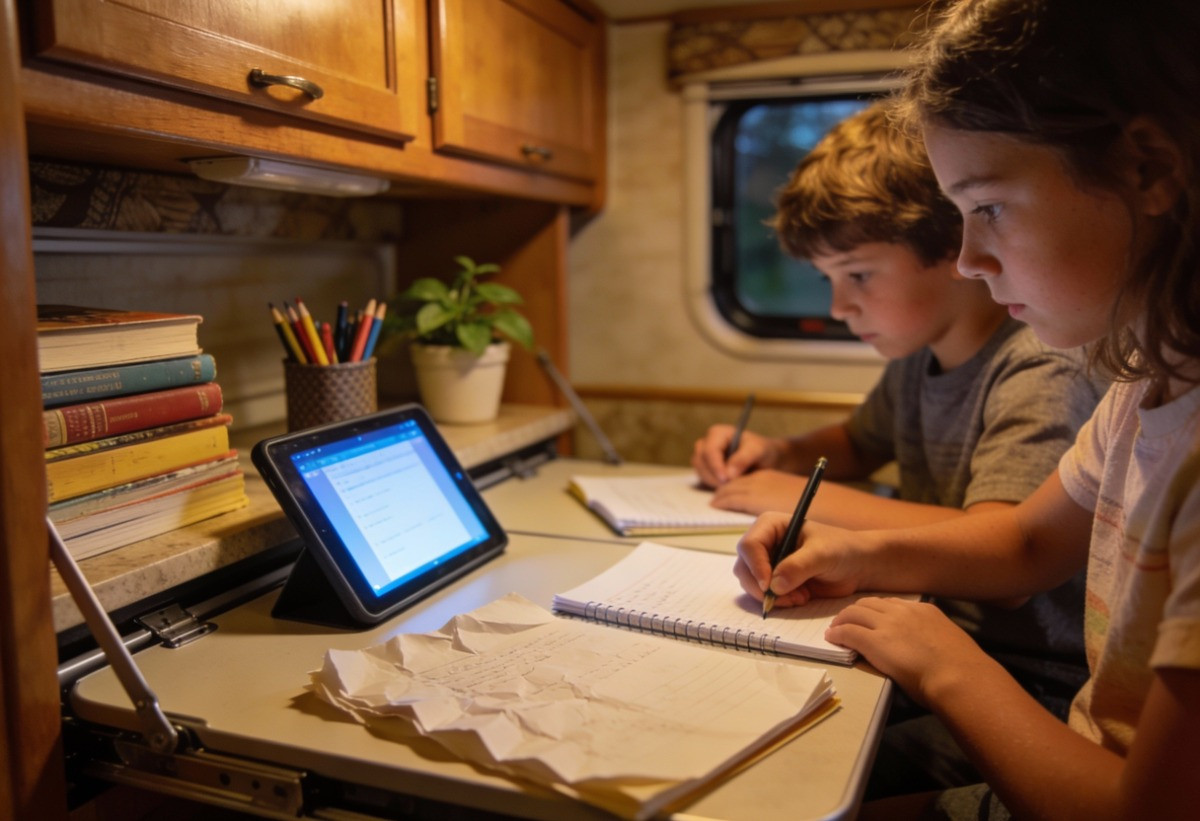
A functional RV classroom is less about buying special gear and more about designing smooth routines for where things live and how fast you can set up. A dedicated school tote, a drawer for notebooks, and a small container for pencils keep the daily start from turning into a scavenger hunt across the rig.
Seating matters more than families expect, because a kid who is uncomfortable will wiggle through every subject, and that drains everyone’s patience. If your dinette is the main workspace, a simple cushion setup or a lap desk can turn the same space into something that feels “school-ready” without remodeling your RV.
Quiet corners are the other half of the puzzle, especially when multiple kids need different levels of focus. Headphones, a reading nook on a bunk, or even a “one kid at the table, one kid on the bed” rotation can create the feeling of separate rooms, which helps learning stay calm in a small footprint.
How Do You Handle Internet, Devices, and Screen Time?
Internet is useful, yet it is not always reliable on the road, which is why RVing families do well when they plan for “offline-first” learning. Downloadable lessons, audiobooks stored on devices, and a few low-tech favorites like workbooks or flashcards keep momentum when the campground Wi-Fi behaves like a tired squirrel.
Devices can become a battleground if rules are vague, so it helps to separate “learning screens” from “fun screens” with clear time limits and clear reasons. When kids understand that screens are a tool for a specific task, like typing an essay or watching a science demonstration, the conversation shifts from arguing to choosing.
Tech routines also protect your sanity, especially if you charge everything in one place and set a weekly “digital cleanup” for deleting clutter, backing up photos of work, and organizing files. A small habit like naming documents by date can prevent the end-of-year scramble that makes families dread recordkeeping.
Make the Country Your Textbook
Homeschooling on the road shines when you let travel feed your lessons, because a battlefield tour can make history real in a way that no paragraph ever will. Geography becomes tangible when your child watches land flatten into prairie, then rise into mountains, then turn into desert, which naturally sparks questions that lead to research.
Field trips do not need to be expensive to count, since farmers markets, historic downtown walks, wildlife refuges, and visitor centers can offer rich learning with minimal planning. The key is pairing the outing with a simple follow-up, like a short journal entry, a sketch, or a conversation that pulls out what your child noticed.
Travel also supports life skills that many families wish they had learned earlier, like planning a route, checking weather, comparing fuel costs, or making a grocery list that lasts between stops. Those skills build confidence, and they quietly teach critical thinking in a way that feels practical instead of forced.
Records, Portfolios, and Proof Without the Paper Pile
Recordkeeping can feel intimidating in an RV because paper multiplies fast, but simple systems win over fancy systems every time. Many roadschooling families keep one binder for current work and rotate older work into a slim “portfolio box,” which preserves highlights without storing every worksheet.
Digital backups help, especially if you snap photos of written work and save them by subject and month. A short weekly routine, like ten minutes on Friday to file photos and jot notes about what you covered, can prevent the unpleasant surprise of realizing that months have passed without documentation.
Testing, evaluations, and transcripts are easier when you collect small pieces along the way. When you save reading lists, writing samples, and project notes as you go, you can show progress with confidence instead of trying to reconstruct a year from memory.
Social Life for Roadschoolers
Socialization usually looks different on the road, yet different does not mean worse, and many RVing families find their kids build strong connections in shorter bursts. Campgrounds, parks, libraries, and junior ranger programs create natural spaces for kids to meet others quickly, especially when you encourage your child to introduce themselves instead of waiting.
Long-term community can come from routines, like returning to certain regions each season or staying in areas with active homeschooling groups for a few weeks at a time. When kids see familiar faces again, even months later, they start to feel that the road has neighborhoods, too.
Friendships also grow through shared hobbies, such as sports, music, crafts, gaming, or art, because common interests make it easier to connect fast. When your family prioritizes a few consistent interests, your child has a social “home base” no matter where you park.
Teaching Multiple Ages in One Small Space
Multiple ages can be a strength in homeschooling on the road, because younger kids absorb vocabulary and curiosity from older siblings, while older kids build leadership and patience. A family-style learning block, like a shared read-aloud or a joint science topic, creates togetherness before kids split into individual tasks.
Independence skills matter more when space is tight, which is why simple checklists can transform your day. When a child can start their own reading, math warm-up, or handwriting practice without waiting for you, the whole rig feels calmer, and you get space to teach one child at a time.
High School on the Road and Keeping Teens Motivated
High school roadschooling often works best when teens understand the “why” behind the plan, since motivation grows when they can see a path toward goals like college, trades, travel jobs, or entrepreneurship. A clear set of expectations, paired with flexibility in how work gets done, can keep peace while respecting that teens need autonomy.
Credit planning becomes simpler when you treat real-world experiences as part of the portfolio, such as volunteer hours, work experience, dual-enrollment opportunities, and long-term projects tied to travel. Teens often thrive with project-based learning, especially when they can choose a topic and build something meaningful over weeks instead of grinding through disconnected assignments.
Consistency still matters, particularly with writing and math, because those skills sharpen with repetition. Short daily practice can fit into RV life even on busy travel weeks, and it keeps teens from feeling like they must “catch up” later.
When Plans Change: Weather, Breakdowns, and Burnout
RV life includes detours, and schooling can stay steady when your family plans for interruption instead of pretending it will not happen. A “minimum school day” plan, like reading, math practice, and one discussion, keeps learning moving when storms roll in or when the repair shop becomes your classroom.
Burnout can show up in surprising ways, such as constant bickering, tears over small tasks, or a kid who suddenly hates everything they used to enjoy. Reset days help when you treat them as a tool, not a failure, since rest and play often restore focus faster than pushing harder.
Reflection keeps you improving without guilt, especially if you check in once a month about what is working and what feels heavy. When you adjust the plan with honesty, homeschooling on the road becomes sustainable, which is the real victory.
Ready to Homeschool on the Road With Berryland Campers
Homeschooling on the road is easier when your RV fits your family’s routines, because a comfortable layout, dependable systems, and smart storage reduce friction that can derail learning. Berryland Campers understands that RVing families need more than a place to sleep, since your rig becomes your kitchen, your classroom, and your everyday home base.
When you are ready to choose an RV that supports roadschooling life, Berryland Campers can help you find a setup that makes daily living smoother, from seating that works for lessons to storage that keeps materials organized and easy to reach. Reach out to Berryland Campers to start planning a homeschooling-on-the-road season that feels practical, steady, and genuinely fun for the whole family.