
Driving an RV Through Heavy Rain and Wind: What to Know
A little rain does not have to ruin an RV trip, and experienced travelers eventually become accustomed to driving through less-than-perfect weather. Heavy rain and strong wind are different, however, because the size, weight, height, and large exterior surfaces of an RV can make changing weather conditions much more noticeable behind the wheel.
Knowing how to adjust your driving, recognize deteriorating conditions, and decide when it is time to get off the road can make stormy travel considerably less stressful. Whether you are driving a motorhome or towing a travel trailer or fifth wheel, preparation and patience matter much more than keeping to your original arrival time.
Why Bad Weather Feels Different in an RV
RVs are larger and heavier than ordinary passenger vehicles, which affects acceleration, braking, maneuverability, and the amount of space needed to respond when traffic suddenly slows. A motorhome also presents a large surface area to crosswinds, while a travel trailer can react to gusts in ways that are transmitted through the hitch and tow vehicle.
Height adds another consideration because taller vehicles have a higher center of gravity than typical cars. You probably will not notice much difference during an ordinary afternoon shower, but stronger wind, sudden gusts, wet pavement, and limited visibility can combine to make conditions uncomfortable surprisingly quickly.
The goal is not to become afraid of driving an RV in the rain. Instead, RV owners should recognize that the same weather that feels mildly inconvenient in a sedan may demand more attention when you are controlling a much larger vehicle.
Slow Down Before Conditions Become Difficult
One of the easiest adjustments you can make in poor weather is reducing your speed before the situation becomes uncomfortable. Wet pavement decreases available traction, while heavier rain can make lane markings, traffic, debris, and changes in the roadway more difficult to identify early.
Slowing down also gives you additional time to react. An RV cannot change direction or stop as casually as a small passenger car, particularly when it is heavily loaded for a trip, which makes additional following distance especially important when visibility and road conditions deteriorate.
Avoid treating the posted speed limit as a target during a storm. The appropriate speed is the one that allows you to remain comfortably in control for the conditions around you, even if that means traveling substantially below the normal flow of traffic.
How Dangerous Is Heavy Rain for an RV?
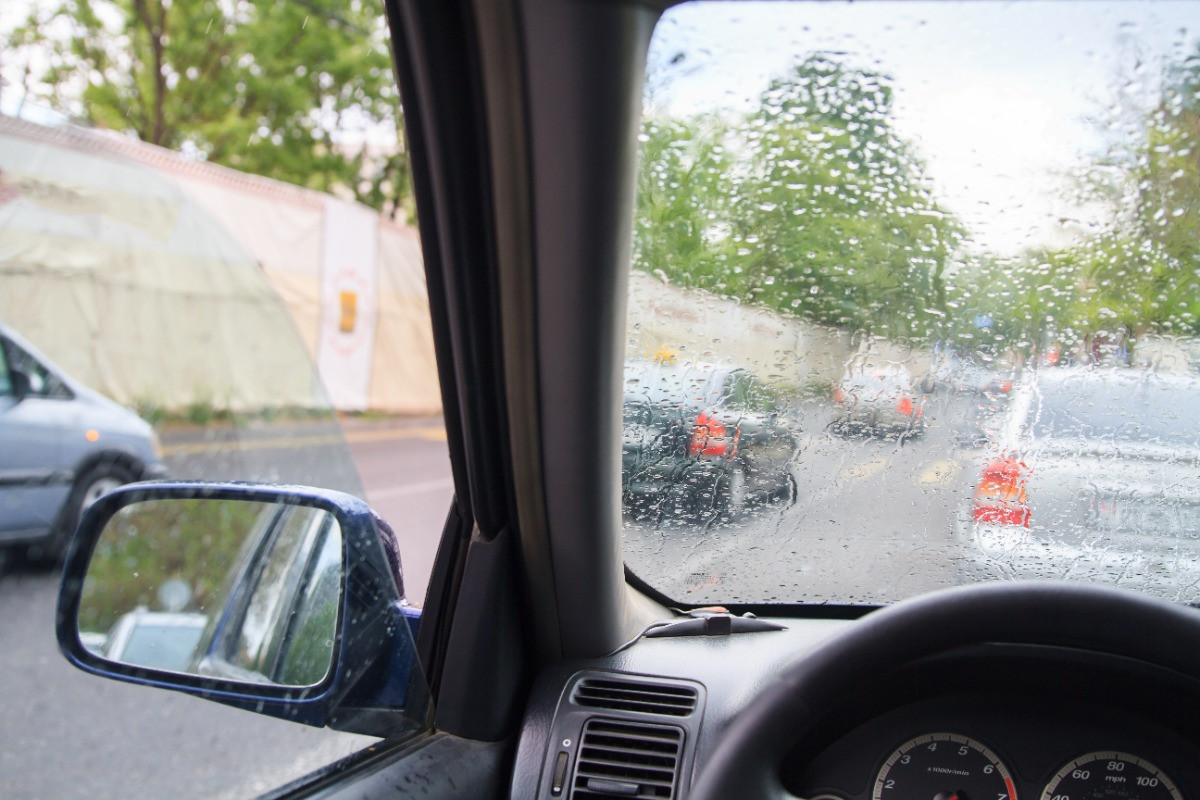
Heavy rain creates several problems simultaneously, which is why it deserves more attention than simply turning on the windshield wipers. Water reduces tire traction, visibility can disappear behind the spray produced by other vehicles, and puddles may hide potholes, debris, or deeper standing water.
Hydroplaning is another concern when enough water separates a tire from the pavement and reduces its ability to maintain traction. Speed, tire condition, water depth, and other factors all influence the risk, so maintaining good tires and reducing speed before encountering standing water are important parts of wet-weather RV travel.
Perhaps the most important rule is never to assume that a flooded roadway is safe simply because another vehicle crossed it. Floodwater can conceal damaged pavement, washed-out sections of road, or unexpectedly strong currents, making turning around far safer than trying to determine whether your RV can make it through.
Give Yourself Much More Room to Stop
Following distance becomes particularly important when you are operating a large RV in the rain. Even under good conditions, large and heavy vehicles require more space to slow down, and wet roads introduce an additional variable precisely when sudden braking is something you want to avoid.
Rather than focusing on an exact number of car lengths, create a generous buffer between your RV and traffic ahead, then increase that buffer as rain becomes heavier. The additional space gives you more opportunity to reduce speed gradually instead of making abrupt steering or braking inputs.
Wind Can Be More Challenging Than Rain
Rain usually announces itself clearly, while wind can catch an RV driver by surprise. A steady breeze may require only small steering corrections, yet a strong crosswind or sudden gust can push against the broad side of a motorhome or trailer and make the vehicle feel as though it wants to move sideways within the lane.
Conditions can change quickly around exposed bridges, open fields, hills, large buildings, and gaps between trees because surrounding terrain affects airflow. You may also feel a sudden change in pressure when a large truck passes, particularly when traveling in already windy conditions.
A firm, controlled grip on the steering wheel helps you respond without overcorrecting, while reducing speed gives you more time to manage unexpected movement. If you find yourself continually fighting to remain centered in the lane, conditions may have moved beyond the point where continuing the trip makes sense.
Travel Trailers Require Special Attention in Crosswinds
People towing travel trailers should pay particular attention to how the trailer behaves behind the tow vehicle. Crosswinds, passing trucks, abrupt steering, excessive speed, improper loading, or an incorrectly configured towing setup can contribute to instability and trailer sway.
Correct weight distribution and an appropriate hitch setup should be addressed before the trip rather than after bad weather begins. Tires should be properly inflated and in good condition, cargo should be secured and distributed appropriately, and the entire combination should remain within the applicable weight ratings for the tow vehicle, hitch, trailer, and associated equipment.
If a trailer begins behaving unusually in windy weather, do not assume you simply need to grip the steering wheel harder and continue. Reducing speed smoothly and finding a safe place to stop may be the appropriate response, particularly if gusts are becoming stronger or maintaining lane position is increasingly difficult.
Should You Use Cruise Control in Heavy Rain?
Cruise control is convenient during long highway drives, but difficult weather is generally a good time to take more direct control over vehicle speed. Conditions can change from one section of pavement to another, and actively controlling the accelerator makes it easier to respond gradually as visibility, traffic, standing water, or wind conditions change.
The same principle applies to other convenience features. Stormy driving demands more attention than an uneventful interstate cruise, so minimizing distractions, keeping both hands available for vehicle control, and paying close attention to surrounding traffic should take priority over maintaining a perfectly constant speed.
Visibility Should Determine Whether You Keep Going
Some storms become dangerous long before the road actually floods or the wind becomes extreme. If rain is falling hard enough that you cannot comfortably identify lane markings, vehicles, exits, or hazards ahead, reducing speed is necessary, but there eventually comes a point when slower driving no longer solves the problem.
Use your headlights appropriately so other road users can see your RV, keep the windshield and mirrors clear, and make sure your wiper blades are in good condition before beginning a trip. Proper visibility is especially important in an RV because your mirrors provide essential information about vehicles beside and behind you.
If visibility becomes severely limited, find a safe location away from active traffic and wait for conditions to improve. A rest area, campground, truck stop, or suitable parking area is generally preferable to stopping along a highway shoulder when safer alternatives are available.
When Is It Time to Pull Over?
There is no universal wind speed or rainfall rate at which every RV driver must stop because vehicle size, configuration, weight, road orientation, gust intensity, visibility, and driver experience all influence how an RV responds. Your ability to maintain predictable control is more useful than trying to follow a single number.
Warning signs include repeated difficulty holding your lane, severe trailer movement, rapidly worsening visibility, standing water, debris crossing the roadway, frequent steering corrections, or simply reaching the point where driving requires so much concentration that you no longer feel comfortably in control. Continuing because you are close to your destination is rarely worth adding unnecessary risk.
When you decide to stop, choose the location carefully. Avoid flooded low areas, unstable ground, and places where falling trees or branches could present another hazard, particularly during severe thunderstorms or high winds.

Severe Weather May Require More Than Parking the RV
An RV provides excellent shelter for ordinary camping, but it should not automatically be treated as a safe shelter during extreme wind or tornado conditions. If severe weather threatens your location, pay attention to official warnings and identify sturdy shelter rather than assuming that remaining inside the RV is always the safest option.
This is particularly important when staying at an RV park or campground. Before severe weather arrives, determine whether the property has a designated storm shelter or another substantial building nearby, then make sure everyone traveling with you knows where to go if conditions deteriorate quickly.
Checking the forecast before departure can help you avoid making these decisions from the driver's seat. If a major storm system is expected to cross your route, changing your departure time or spending another night at your current campground may be far easier than trying to outrun worsening weather.
Your Tires Matter Even More in Wet Weather
Tires provide the connection between thousands of pounds of RV and the road, making their condition particularly important during heavy rain. Before traveling, check inflation according to the requirements for your particular RV or tow vehicle, inspect the tread and sidewalls, and address unusual wear rather than assuming a tire is acceptable because it has not gone flat.
Do not forget the tow vehicle when checking a trailer setup. The truck or SUV is responsible for steering and much of the braking and stability of the combination, so its tires deserve the same attention as those underneath the camper.
Routine inspections also give you an opportunity to notice problems before weather magnifies them. Good equipment cannot eliminate the risks associated with severe rain or wind, but neglected equipment can make already challenging conditions unnecessarily difficult.
Preparing Before the Trip Makes Storms Easier to Handle
Weather preparation should begin before you pull out of the driveway. Check the forecast along your entire route rather than looking only at conditions around your starting point or destination, particularly when traveling several hundred miles through multiple weather systems.
A basic pre-trip inspection should also confirm that tires, lights, wipers, mirrors, brakes, hitch equipment, and exterior components are ready for travel. Make sure awnings, antennas, storage doors, steps, and other exterior equipment are secured before departure, because strong wind can turn a loose or partially secured component into an expensive problem.
Inside the RV, secure belongings that could move if you need to brake or change direction unexpectedly. Stormy conditions are difficult enough without discovering that cabinets have opened or unsecured objects are shifting around behind you.
Patience Is One of the Most Useful Pieces of RV Equipment
RV travel is supposed to give you more freedom, which includes the freedom to change your schedule when the weather does not cooperate. Arriving an hour or even a day later is usually a minor inconvenience compared with pushing through conditions that make you uncomfortable behind the wheel.
Experienced RV travelers learn that stopping is not an admission that they cannot handle their rig. Knowing when conditions are approaching the limits of your vehicle, equipment, or personal comfort is part of becoming a more capable RV owner.
Travel With Confidence in the Right RV
Heavy rain and wind are realities of traveling, but good preparation, appropriate speed, increased following distance, proper equipment, and a willingness to stop when conditions deteriorate can make difficult weather much easier to manage. The most important principle is simple: control and visibility matter more than maintaining your schedule.
Having an RV that is properly matched to your tow vehicle and camping plans can also make every trip more comfortable. Berryland Campers can help you compare travel trailers, fifth wheels, motorhomes, and other RV options while considering the size, weight, features, and layout that make sense for the way you want to travel. With the right RV and a sensible approach to changing weather, you can spend less time worrying about the road ahead and more time enjoying where it takes you.