

RV Road Trip Games for All Ages
Long stretches of highway can feel peaceful for about twenty minutes, then the questions start rolling in, the snacks get raided, and someone inevitably says they are bored. A good lineup of RV road trip games fixes that fast because it gives everyone a shared mission, even if the mission is simply spotting the next water tower or inventing a ridiculous story about the car that just passed you.
At Berryland Campers, we are big believers in making the drive part of the vacation, not just the thing you endure to reach the campsite. The right games keep kids engaged, help adults stay upbeat, and turn random roadside moments into the little memories that stick.
Set the Game Rules Before the Wheels Roll
Road trip games work best when everyone understands the basics before the first “Are we there yet?” hits the air. Pick a handful of games, explain the rules quickly, and decide how you will handle points, prizes, or just bragging rights, because a game that starts as fun can turn into chaos when people argue over what counts as a “barn” or whether a cloud looked “exactly like a dinosaur.”
A simple structure keeps things smooth: rotate who chooses the next game, set time limits for each round, and agree that the driver gets veto power if something becomes distracting. When the rules are clear, everyone relaxes into the play, and the whole RV feels more like a team than a collection of separate moods.
The No-Prep Classics That Always Land
Some games need nothing more than eyes, voices, and a little creativity, which makes them perfect when you are loading up, settling in, or waiting for someone to find the sunscreen they swear was “right here.” These classics are also flexible, since you can make them shorter for younger kids or add layers for teens and adults who want more challenge.
“I Spy” is a staple for a reason, especially when you add themes like “I spy something that starts with a hard sound” or “I spy something you would see at a campsite.” The License Plate Game works the same way, whether you are collecting states, letters, or funny plate slogans, because the road keeps feeding you new material without you lifting a finger.
How to Make “I Spy” Fun for Everyone?
“I Spy” can fall flat if it becomes too easy for older players or too hard for younger ones, so the trick is choosing a version that matches the group. Younger kids do great with colors and simple shapes, while older kids and adults stay engaged when you use categories like “something used for construction” or “something that belongs in a kitchen,” since it makes the search feel like a mini scavenger hunt.
For mixed ages, try “I Spy Plus One Clue,” where the guesser can ask for one extra hint after three wrong guesses. That small adjustment keeps the pace friendly and prevents the game from turning into a long standoff where nobody is having fun anymore.
Spotting Games That Keep Eyes Up and Spirits High
Observation games are a road trip cheat code because they turn the landscape into entertainment, even when the scenery is mostly trees and asphalt. The easiest version is “Road Trip Bingo,” which you can play with printed cards, handwritten lists, or reusable dry-erase boards if you like to keep things tidy.
“Car Color Chase” is another great option: pick a color, set a time limit, and count how many you see. When you want a cooperative twist, make it the whole RV versus the road, where everyone works together to hit a goal like “25 red vehicles before the next rest stop.”
Word Games for When the Scenery Gets Repetitive
Sometimes you hit a stretch where the view stops changing, and that is when word games shine because they live entirely in your head. “The Alphabet Game” works well because it is simple and steady, and you can play it by finding letters in signs, billboards, and trucks without making anyone feel like they need to be “good at games” to participate.
For a more talkative option, try “Categories,” where one person picks a category like “camping gear” or “things you pack in a cooler,” then each player takes a turn naming something new until someone repeats or stalls. The best part is that it naturally sparks conversation, which makes the miles go by faster without feeling forced.
Storytelling Games That Turn Your RV Into a Comedy Club
Story games are perfect when the group is in a social mood and you want laughter more than points. “One Sentence Story” is the classic: one person starts with a sentence, each person adds one sentence, and the plot spirals into something absurd, especially when someone introduces a bear that steals tacos or a raccoon that drives a scooter.
A slightly more structured version is “Three-Word Plot,” where each person can only add three words at a time. The short contributions keep everyone listening closely, and the pace stays snappy, which matters when you are traveling with kids who lose interest the moment a game slows down.
Games That Work When Kids Are Learning to Read
If you have toddlers or early readers, the best games feel like play while secretly building skills. “Sound Hunt” is a gentle favorite: you pick a sound like “sss” or “mmm,” then everyone tries to spot things outside the window that start with that sound, which turns a simple drive into a rolling vocabulary lesson without anyone feeling like they are doing homework.
“Counting Quests” also works beautifully at this age, especially if you tie it to things they already love. Pick something like dogs, flags, or trains, then celebrate each sighting as a win, because little kids respond to the feeling of progress even more than they respond to complicated rules.
Teen-Friendly Challenges That Do Not Feel Like “Kid Games”
Teens usually want games that feel clever, competitive, or at least not childish, which means you will get more buy-in if you pick formats with strategy or humor. “Would You Rather” works well when you make it road-trip themed, like choosing between cooking every meal outside for a week or only taking showers at campgrounds with cold water, because it leads to debates that are funny without being awkward.
Trivia is another strong choice, especially if each person gets to bring a category, since teens love having a niche they can dominate. Keep rounds short, mix in pop culture with travel and nature topics, and let the points be informal, because the energy matters more than the score.
Cooperative Games That Reduce Backseat Drama
Co-op games are underrated on RV trips, especially when you have siblings or friends who swing between best buddies and sworn enemies. “Team Scavenger List” is a simple one: you build a shared list of things to spot, like a windmill, a horse trailer, or a roadside fruit stand, then everyone works together to check off the whole list before you arrive.
Another great co-op option is “Two Truths and a Lie,” played as a group guessing game rather than an individual performance. When people are trying to read each other’s tells, the focus shifts away from bickering and toward shared laughter, which can completely change the mood inside the RV.
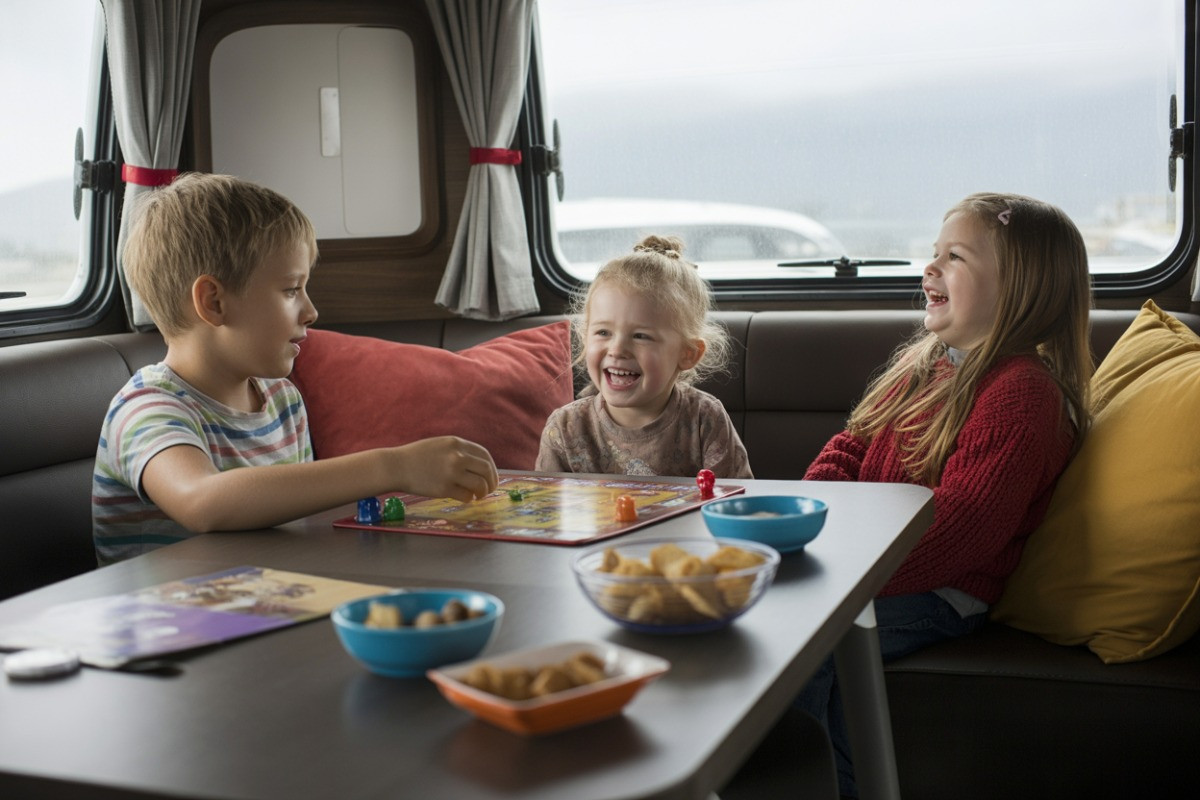
The Snack Games That Magically Fix Attitudes
Food is not just fuel on a road trip, it is morale, and games that involve snacks can reset the vibe fast. One easy idea is “Snack Draft,” where you put a few options on the table, take turns picking what goes into a shared snack box, and then reveal it later as the “loot” for the next round of games.
For younger kids, “Mystery Crunch” is simple and oddly effective: everyone closes their eyes, someone hands out a small bite, and players guess what they are eating. Keep it safe, keep it allergy-friendly, and keep it light, because the goal is giggles, not a culinary stunt.
Screen-Friendly Games That Still Feel Like Family Time
Screens are not the enemy, especially on long drives, but they work best when you use them intentionally instead of letting them become an automatic default. Audio games are a great middle ground, since everyone can listen together while still looking out the window or relaxing, and you can switch between game time and quiet time without a battle.
Try “Podcast Pause,” where you listen to a story or mystery for a few minutes, pause, and have everyone predict what happens next. The predictions are often more entertaining than the episode, and it creates the feeling of a shared experience without everyone disappearing into separate devices.
What Should You Pack for an Easy Game Kit?
A small game kit saves you from relying on memory when the energy dips, and it keeps you from scrambling through cabinets while the RV is moving. A few dry-erase boards, markers, a deck of cards, a small notepad, and a couple of simple travel games cover most situations, especially when you choose items that work for multiple ages.
Comfort matters too, since a cramped or messy space kills game momentum faster than you would think. Keep the kit in one grab-and-go bin, include a small trash bag for wrappers, and stash a few pencils that are not precious, because someone will lose one in the cushions.
Safety and Sanity Tips for Playing While Rolling
The best road trip games never compete with safety, which means the driver should not be responsible for looking for tiny details or keeping score. Choose games that let the driver participate through listening, quick verbal answers, or simple observation that does not pull attention away from the road.
Motion sickness also matters, especially for passengers who cannot look down for long, so favor games that keep eyes up and heads steady. If someone gets queasy, switch to audio-based games, calm storytelling, or simple spotting challenges, since a happy stomach keeps everyone happier overall.
Ready for a Road Trip That Feels Shorter?
When you build a game rotation that fits your crew, the miles stop feeling like empty space and start feeling like part of the adventure. A few classics, a couple of cooperative options, and one or two teen-approved challenges can carry you through almost any drive, especially when you stay flexible and follow the mood inside the RV.
If you want help planning an RV trip that is comfortable, family-friendly, and set up for the kind of travel days you actually enjoy, Berryland Campers is here to help you find the right RV and the right rhythm. Pack your game kit, cue up your first round, and let the road become part of the story.