
Questions to Ask When Shopping for Your First RV
Shopping for your first RV is exciting, but it can also feel like walking into a whole new language of floor plans, tank sizes, tow ratings, slide-outs, warranties, and model names. Every RV looks fun when you picture weekend campfires, quiet mornings, and open-road adventures, yet the right choice depends on how you plan to travel, who will come with you, and what kind of comfort you expect once you arrive. A great first RV should make your trips easier, not more complicated, which is why asking the right questions early can save you time, money, and stress later. When you slow down and think through the details before buying, you are much more likely to choose an RV that fits your life instead of simply falling for the first one that looks good on the lot.
Berryland Campers works with first-time RV shoppers all the time, and one of the biggest things we see is that people often know they want the freedom of RV travel before they know exactly what kind of RV will support that dream. That is completely normal, because most people do not know what they value most until they start comparing real options side by side. Some shoppers need a lightweight travel trailer for easy weekend trips, while others want a fifth wheel with room for longer stays, family visits, and extra storage. The goal is not to know everything before you begin, but to ask better questions as you shop.
What Kind of Camping Do I Actually Want to Do?
Before comparing models, prices, or features, it helps to picture how you want to use your RV in real life. Weekend camping at nearby state parks calls for a different setup than cross-country road trips, long seasonal stays, or tailgating during football season. If you plan to spend most of your time outdoors, you may not need the largest living area, but if rainy days, remote work, or family movie nights are part of the plan, interior comfort becomes much more important. Your first RV should match your habits, not a fantasy version of camping that sounds nice but does not reflect how you truly relax.
Think about whether you prefer full-hookup campgrounds, rustic sites, national parks, private RV resorts, or a mix of everything. Some RVs are easier to maneuver into tighter campsites, while larger models may provide more comfort but limit where you can stay. If you want to camp off-grid, you will need to ask about fresh water capacity, battery power, generator compatibility, solar options, and holding tanks. If you prefer developed campgrounds with water, sewer, and electrical hookups, those features may matter less than layout, sleeping space, and overall convenience.
How Many People Need to Sleep Comfortably?
Sleeping space can look generous on paper, but comfort depends on who is actually using each bed. A dinette that converts into a sleeping area may work well for a child, but it may not be ideal for an adult guest who expects a full night of rest. Bunkhouse floor plans can be excellent for families because they give kids their own space, while couples may prefer a layout with a private bedroom and more open living space. When shopping for your first RV, ask who will travel with you most often, then choose sleeping arrangements around that regular group instead of rare exceptions.
It is also smart to think beyond the number of sleeping spots and ask how easy those spaces are to use every night. If a bed has to be folded, rearranged, or converted each evening, that may become frustrating during longer trips. A dedicated mattress, a walk-around bed, or a separate bunk area can make daily routines feel smoother, especially when everyone is tired after a full day outside. First-time shoppers sometimes underestimate how much better a trip feels when bedtime does not require moving half the RV around.
Can My Vehicle Safely Tow This RV?
Towability is one of the most important questions for anyone considering a travel trailer or fifth wheel. Your vehicle’s towing capacity matters, but it is only part of the equation, because payload, hitch weight, cargo, passengers, water, propane, and gear all affect the safe towing picture. An RV that looks manageable when empty can become too heavy once you load it for a real trip. Before buying, ask for the unloaded vehicle weight, gross vehicle weight rating, cargo carrying capacity, and hitch weight, then compare those numbers carefully with your tow vehicle.
A comfortable towing experience is about more than staying under the maximum rating. If your vehicle is technically capable but constantly strained, your trips may feel stressful instead of relaxing. You should ask whether you need a weight distribution hitch, sway control, a brake controller, mirror extensions, or other towing equipment to feel confident on the road. A good RV dealership can help you understand these details, but you should still bring your vehicle information so the conversation starts with real numbers instead of guesses.
Which Floor Plan Fits My Daily Routine?
The floor plan is where the RV starts to feel personal, because it determines how you cook, sleep, shower, store gear, move around, and spend time indoors. A beautiful RV can become annoying quickly if the kitchen feels cramped, the bathroom is hard to use, or the bedroom lacks privacy. Walk through each model slowly and imagine a normal day, from making coffee in the morning to getting ready for bed at night. If the layout makes those little routines easier, it is probably a stronger fit than one that only looks impressive at first glance.
Pay attention to how the RV feels with slides in and slides out, because travel days are part of ownership too. You may need to reach the bathroom, refrigerator, or bedroom while stopped at a rest area, and some layouts become difficult to use when the slides are closed. Open storage doors, stand in the shower, sit on the sofa, pretend to prep a meal, and check whether multiple people can move around without constantly stepping over one another. These simple tests reveal more than a quick glance ever will.
How Much Storage Do I Really Need?
Storage is easy to overlook during a first shopping trip because empty RVs can feel spacious on the lot. Once you add clothes, cookware, towels, tools, chairs, hoses, cords, food, cleaning supplies, outdoor gear, and personal items, storage becomes one of the biggest comfort factors. Ask where your everyday items would go, not just whether the RV has cabinets. A well-designed smaller RV with smart storage can feel more useful than a larger model with awkward or shallow compartments.
Outdoor storage matters too, especially if you plan to bring camping chairs, grills, fishing gear, leveling blocks, or maintenance supplies. Pass-through storage can be a major advantage for travel trailers and fifth wheels, while smaller compartments may require more careful packing. Look at the height, width, and accessibility of each space instead of only counting how many doors you see. Good storage should make setup, cleanup, and travel days easier, not turn every trip into a puzzle.
What Features Are Essential, and Which Ones Are Just Nice?
RV shopping becomes easier when you separate must-have features from nice extras. Essentials may include a private bedroom, bunk beds, a large refrigerator, a certain bathroom size, strong air conditioning, or enough seating for the whole family. Nice extras might include an outdoor kitchen, fireplace, theater seating, extra television, upgraded sound system, or decorative lighting. Those upgrades can absolutely improve your experience, but they should not distract you from the features that will affect every trip.
It helps to make a short priority list before you shop, then revise it after touring several RVs. First-time buyers often discover that something they thought mattered is less important than expected, while something practical, such as pantry space or bathroom access, becomes a higher priority. Ask yourself what would bother you after three rainy days inside the RV, because that question usually points toward true priorities. Comfort, function, and ease of use should guide the decision more than flashy features.
What Should I Know About RV Utilities?
An RV has several systems that work together, and first-time buyers should understand the basics before choosing a model. Ask about the electrical system, water heater, furnace, air conditioning, refrigerator type, plumbing, holding tanks, propane system, and battery setup. You do not need to become a technician before buying, but you should know how these systems affect camping comfort. A dealership walkthrough can help you learn how everything operates, especially if you are new to RV ownership.
Tank capacities are especially important if you plan to camp without full hookups. Fresh water capacity determines how long you can use sinks, the shower, and the toilet before refilling, while gray and black tank sizes affect how often you need to dump wastewater. Battery capacity matters for lights, fans, water pumps, slides, and other basic functions when shore power is unavailable. These details may sound technical, but they directly shape how flexible your trips can be.
How Much Maintenance Should I Expect?
Every RV needs regular care, just like a house and vehicle combined into one travel-ready package. Ask about roof inspections, sealant checks, tire care, battery maintenance, winterization, slide-out care, appliance service, and general cleaning. Preventive maintenance helps protect your investment and can reduce the chance of trip-interrupting problems. First-time owners who understand basic upkeep usually feel more confident, because they know what to watch for before small issues become expensive repairs.
Maintenance also depends on how often you travel, where you store the RV, and what kind of weather it faces. Louisiana heat, humidity, heavy rain, and strong sun can all affect seals, tires, exterior surfaces, and interior materials over time. Covered storage, routine washing, ventilation, and seasonal inspections can help your RV stay in better condition. When shopping, ask what ownership care looks like for the specific model you are considering, not just RVs in general.
What Is Included in the Price?
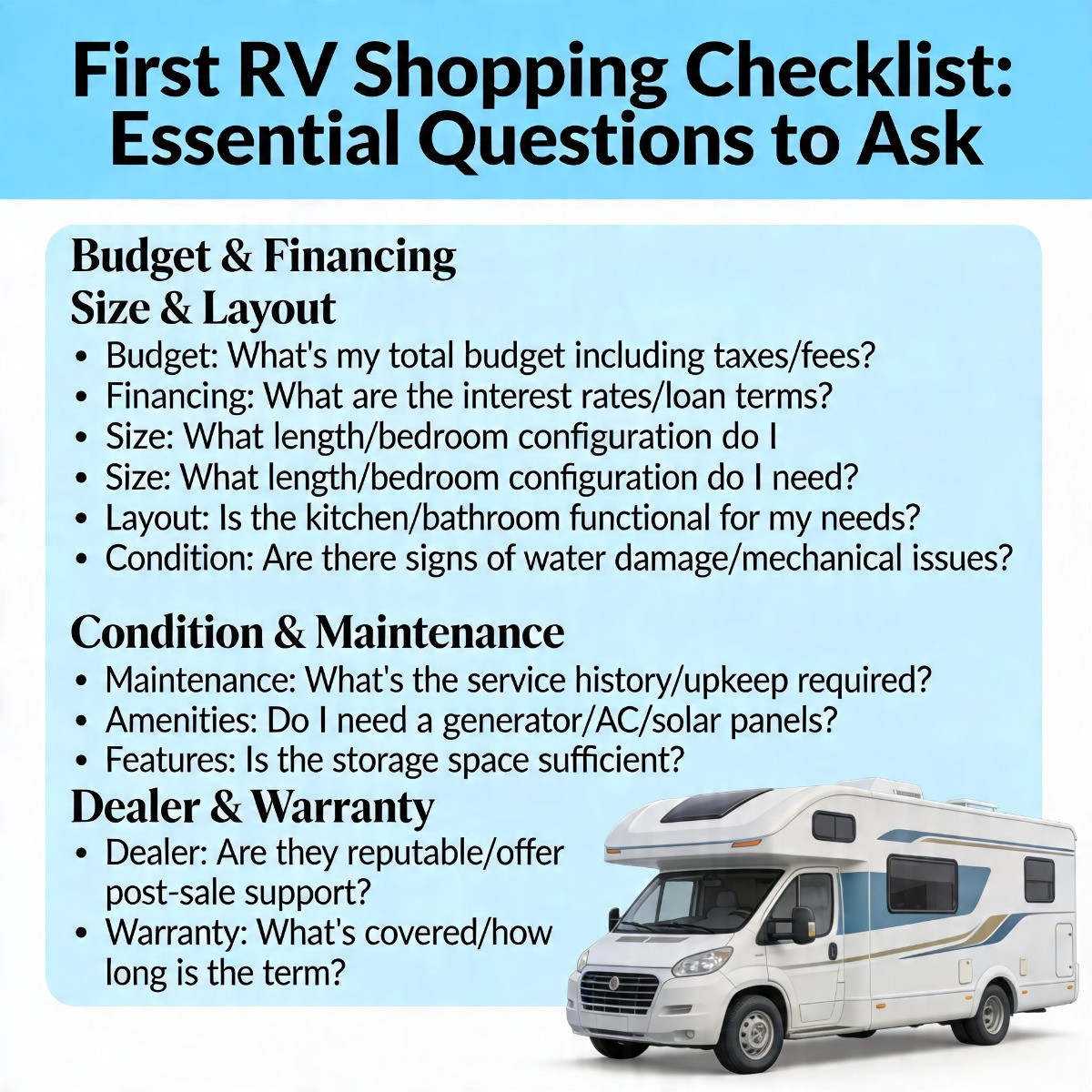
The listed price is important, but first-time buyers should also ask what is included before comparing one RV to another. Some costs may involve taxes, title, registration, dealer fees, hitch equipment, brake controllers, accessories, protection plans, or delivery preparation. You may also need starter supplies such as sewer hoses, water hoses, electrical adapters, leveling blocks, wheel chocks, surge protection, and basic tools. Knowing the full picture helps you create a realistic budget instead of focusing only on the monthly payment or sale price.
Financing terms deserve the same level of attention. Ask about loan length, down payment options, interest rate, monthly payment, and whether there are penalties for paying early. A lower monthly payment may look attractive, but the total cost over time can vary depending on the terms. A clear budget should include the RV, essential gear, insurance, storage, maintenance, campground fees, fuel, and travel costs.
What Warranty and Service Support Are Available?
Warranty coverage can make a big difference in your first ownership experience, especially while you are still learning how everything works. Ask what the manufacturer warranty covers, how long it lasts, and whether any components have separate warranties. You should also ask how service appointments work, who performs warranty repairs, and what documentation you need if a problem appears. Good support after the sale can help first-time owners feel much more comfortable.
Service access matters because RVs include many specialized parts and systems. A dealership with knowledgeable service support can help with maintenance, repairs, inspections, upgrades, and questions that come up after your first few trips. When you buy from Berryland Campers, you are not just choosing an RV from a lineup, you are also choosing a team that can help you understand ownership with more confidence. That kind of guidance can be especially valuable when every part of RV life still feels new.
Should I Buy New or Used?
New RVs appeal to many first-time buyers because they offer the latest features, clean interiors, current styling, and manufacturer warranty coverage. They also give you the chance to start fresh, without wondering how a previous owner maintained the RV. If you want the newest floor plans, updated technology, and the strongest warranty protection, a new RV may be the right path. The tradeoff is that new models usually cost more upfront than comparable used options.
Used RVs can be a smart choice for shoppers who want more value, a lower purchase price, or a chance to enter RV ownership without stretching the budget. The key is to buy from a trusted source, ask about inspection history, review condition carefully, and understand what warranty or service options may be available. A well-kept used RV can offer years of excellent travel, but condition matters more than age alone. Whether you choose new or used, the best decision is the one that fits your budget, comfort level, and travel plans.
What Questions Should I Ask During the Walkthrough?
The walkthrough is your chance to slow down and learn how the RV actually functions. Ask how to operate the slides, awning, stabilizers, water heater, furnace, air conditioner, refrigerator, electrical panel, dump valves, and battery disconnect. Ask where important shutoffs, fuses, breakers, drains, and access panels are located. These details may not feel exciting during the purchase process, but they are incredibly helpful once you are setting up at a campground.
Take notes during the walkthrough because it is easy to forget small details later. You can also ask which tasks you should practice before your first camping trip, such as hitching, leveling, connecting power, filling water, dumping tanks, and testing appliances. A practice setup at home or close to home can help you build confidence before a longer trip. The more familiar you become with your RV before leaving, the smoother your first adventure will feel.
Your First RV Should Make Travel Feel Easier
The best first RV is not always the biggest, newest, or most expensive model on the lot. It is the one that fits your tow vehicle, budget, travel style, sleeping needs, storage habits, and comfort expectations without making ownership feel overwhelming. When you ask thoughtful questions, you give yourself permission to choose carefully instead of rushing into a decision based only on excitement. That excitement still matters, but it should be supported by practical confidence.
Berryland Campers can help you compare RV types, walk through floor plans, understand features, and narrow your options based on how you actually want to travel. Whether you are dreaming about weekend getaways, family camping trips, long road adventures, or a more flexible way to explore, the right questions will point you toward the right RV. Your first RV should feel like the beginning of something enjoyable, not a confusing purchase you have to figure out alone. With the right guidance and a clear sense of what matters most, you can shop with confidence and start planning the trips you have been imagining.