
Comparing Forest River RVs vs. Keystone RVs: Which Offers Better Value?
Shopping for an RV becomes much easier once you narrow the field, yet comparing two major manufacturers can still leave you staring at floor plans, specifications, and feature lists wondering which differences actually matter. Forest River and Keystone both offer RVs across a wide range of sizes, layouts, and price points, which makes them natural competitors for buyers searching for a travel trailer, fifth wheel, or toy hauler.
The question is not simply whether Forest River or Keystone makes the “better” RV, because value depends heavily on how you camp, what you tow with, how much space you need, and which features you actually plan to use. Looking beyond the badges and comparing the complete ownership experience can help you decide which manufacturer makes more sense for your budget.
What Does Better RV Value Actually Mean?
Price matters, although the least expensive RV is not automatically the best value. A camper that costs slightly more but gives you the layout, storage capacity, towing characteristics, and equipment you need may be a better purchase than a cheaper model that requires immediate upgrades or becomes frustrating after a few trips.
Long-term value also includes construction, maintenance requirements, available features, dealer support, and how comfortably the RV fits your camping habits. When comparing Forest River RVs vs. Keystone RVs, it helps to think about what you receive for the purchase price rather than looking at the sticker price alone.
Forest River Offers an Enormous Range of Choices
One of Forest River's biggest advantages is variety. Rather than operating as one narrowly defined RV line, Forest River encompasses numerous recognizable brands and product families, giving shoppers choices ranging from compact entry-level travel trailers to elaborate fifth wheels and specialty recreational vehicles.
That variety can be especially valuable if you are still deciding what kind of camper you want. Forest River families such as Cherokee, Rockwood, Flagstaff, Salem, Wildwood, and others approach the market differently, which gives buyers opportunities to compare construction styles, floor plans, features, weights, and pricing while remaining within the larger Forest River family.
Keystone Keeps Its Product Families Easy to Compare
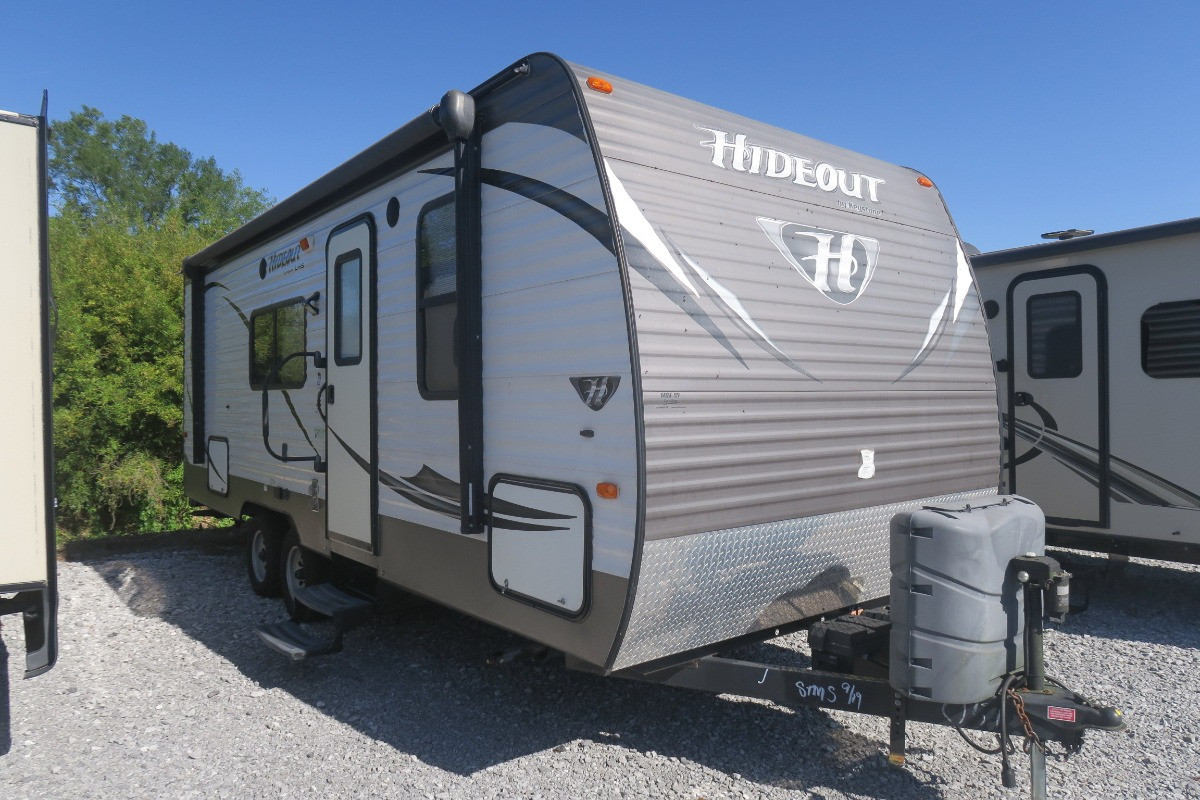
Keystone also offers considerable variety, although its product lineup tends to revolve around a smaller collection of highly recognizable families. Names such as Cougar, Montana, Passport, Bullet, Hideout, Springdale, Coleman, and others occupy different portions of the market, making it relatively straightforward to move from more affordable models toward premium alternatives.
This product structure can make comparison shopping feel more manageable, particularly for someone who wants to understand where an RV sits within the manufacturer's overall lineup. Once you determine whether you are interested in an accessible family camper, lightweight travel trailer, premium fifth wheel, or higher-end touring RV, Keystone usually provides a fairly clear path toward the appropriate product family.
Which Brand Gives You More for Your Budget?
Forest River has a strong argument when sheer selection is important because its extensive brand portfolio creates numerous opportunities to find a combination of price and equipment that suits a particular buyer. Two Forest River products in a similar size category may have noticeably different layouts, interior treatments, standard equipment, and pricing, allowing shoppers to prioritize the features they care about most.
Keystone competes by offering models across several price categories while incorporating convenience and technology features throughout its lineup. Depending on the specific model, shoppers may encounter equipment designed around climate control, electrical organization, solar capability, towing, slide operation, connectivity, or easier campsite setup.
The key is to compare actual units rather than assuming one manufacturer's RVs always cost less. RV pricing varies substantially by model, equipment package, dealership inventory, promotions, and model year, which means a Forest River may be the stronger value in one comparison while a Keystone wins another.
Construction Quality Matters More Than the Name on the Front
RV buyers understandably want to know which manufacturer has better construction, yet broad brand-versus-brand statements can be misleading. Forest River produces a huge collection of RVs with different materials and construction methods, while Keystone also changes construction techniques and component choices across its product families.
A better approach is to inspect the specific models you are considering. Look at roof construction, flooring, wall materials, seals, cabinetry, plumbing access, suspension components, slide mechanisms, underbelly protection, storage doors, and exterior finishing rather than relying exclusively on advertising terminology.
Fit and finish deserve attention as well because many annoying ownership problems are comparatively small issues, such as loose trim, poorly adjusted doors, sealant imperfections, or hardware that needs adjustment. Walking through the exact RV before buying gives you an opportunity to open cabinets, operate furniture, inspect storage areas, test moving components, and determine whether the unit feels solid.
How Do Forest River and Keystone Floor Plans Compare?
Forest River's enormous catalog is particularly useful for shoppers with very specific floor-plan requirements. Couples can find compact layouts with generous kitchens and rear bathrooms, while families can explore bunkhouses, private bedrooms, outdoor kitchens, extra storage, and larger living spaces designed to accommodate several people comfortably.
Keystone is similarly competitive when layout is the deciding factor, with options ranging from compact travel trailers to spacious fifth wheels capable of accommodating larger groups. Certain product families emphasize lightweight construction, while others focus heavily on residential-style living spaces, storage, kitchens, and extended-stay comfort.
A floor plan that looks impressive online can feel entirely different once you stand inside it, which is why physical walkthroughs are so useful. Consider whether people can move through the RV while someone is cooking, whether the bathroom feels usable, whether beds are easily accessible, and whether you can reach important areas when slides are retracted.
Towing Requirements Can Completely Change the Comparison
An RV is only a good value when it works safely and comfortably with your tow vehicle. Dry weight is useful for initial comparisons, although buyers should also consider gross vehicle weight ratings, cargo capacity, hitch or pin weight, passengers, camping equipment, water, and everything else that contributes to the loaded combination.
Both Forest River and Keystone offer lightweight options as well as much larger trailers and fifth wheels, so neither manufacturer automatically wins the towing category. Matching the camper to the truck or SUV you already own can sometimes save far more money than choosing an RV based on a small difference in purchase price, especially if the alternative would require upgrading your tow vehicle.
Features Are Valuable Only When You Will Use Them
Modern RVs can include impressive collections of equipment, yet more features do not necessarily equal better value. Solar preparation, larger refrigerators, upgraded climate systems, automatic leveling, outdoor kitchens, entertainment systems, fireplaces, power awnings, and sophisticated control systems can all be worthwhile, although their value depends on how you camp.
Someone who spends most trips at full-hookup campgrounds may prioritize interior comfort and convenience, while travelers who prefer less-developed campsites could care more about battery capacity, solar capability, water storage, ground clearance, and efficient appliances. Comparing Forest River and Keystone feature lists becomes more meaningful once you separate necessities from equipment that simply looks impressive during a showroom tour.
What About Warranty Coverage and Dealer Support?
Warranty protection should be considered alongside purchase price because an RV combines structural components, plumbing, electrical systems, appliances, furniture, mechanical equipment, and products from numerous suppliers. Forest River and Keystone maintain their own warranty programs, while individual components may also carry separate manufacturer coverage, so buyers should review the current terms for the particular RV being considered.
Dealer support matters just as much because the dealership is often your primary point of contact for inspections, maintenance, warranty questions, parts, and repairs. A competitively priced camper purchased from a dealership that provides knowledgeable guidance and dependable service can deliver better long-term value than a slightly cheaper unit purchased without much support after the sale.
Which RV Brand Is Better for Families?
Families often benefit from Forest River's extraordinary floor-plan variety because there are numerous choices with bunks, convertible sleeping areas, outdoor kitchens, large refrigerators, multiple entertainment spaces, and storage designed for groups carrying plenty of gear. That selection can make it easier to find an RV that fits both the family's size and the tow vehicle.
Keystone remains a strong family option, particularly because its lineup includes everything from approachable travel trailers to large bunkhouse fifth wheels. The better choice comes down to details such as sleeping privacy, bathroom access, kitchen usability, storage, and whether everyone can spend a rainy afternoon inside without feeling crowded.
Couples and Extended Travelers Have Different Priorities
Couples who travel frequently may care less about maximum sleeping capacity and more about comfortable seating, kitchen workspace, bedroom accessibility, storage, and bathroom size. Forest River offers many layouts built around these priorities, including compact couples coaches as well as upscale fifth wheels intended for extended stays.
Keystone also performs well in this category, particularly through product families that emphasize premium interiors, larger living areas, climate capability, and storage. Buyers planning longer trips should pay particular attention to the features they will use every day because a comfortable mattress, practical kitchen, convenient storage system, and usable living room can matter far more after several weeks on the road than decorative touches.
Resale Value Is Only Part of the Ownership Equation
Both manufacturers have well-established names in the RV market, but resale value depends on more than the logo attached to the camper. Model popularity, condition, maintenance history, local demand, mileage for motorized units, equipment, age, and evidence of water intrusion or damage can have substantial effects on what an RV is worth later.
Preventive maintenance can therefore be one of the best ways to protect your investment regardless of which brand you choose. Keeping seals maintained, addressing leaks promptly, protecting the roof, servicing mechanical systems, checking tires and running gear, and storing the RV properly can contribute more to long-term value than relatively small differences between competing manufacturers.
Forest River vs. Keystone: Which Offers Better Value?
Forest River may have the advantage for shoppers who want the widest possible range of products and enjoy comparing numerous brands, floor plans, construction styles, and feature packages. Its extensive catalog gives buyers plenty of opportunities to find an RV that closely matches their priorities instead of compromising on a layout that is merely close enough.
Keystone may be the better fit for shoppers who appreciate clearly differentiated product families and want to compare models within a more unified lineup. Its selection still covers a broad spectrum of camping styles, from lightweight travel trailers to large premium fifth wheels and toy haulers, while placing considerable emphasis on convenience and RV-specific technology.
Ultimately, the best value is the RV that fits your tow vehicle, budget, travel plans, and everyday camping needs without making you pay for features you will rarely use. Berryland Campers can help you compare Forest River and Keystone RVs side by side, explore different floor plans, and walk through the details that are difficult to appreciate from specifications alone. When you are ready to find your next camper, seeing several models in person can make the differences much clearer and help you choose an RV that will continue to feel like a good investment long after the first trip.